
India reaches Asian Games 2026 quarter-finals: Three singles players, three generations, and one data vacuum
**Câu trả lời cốt lõi**: Ấn Độ đánh bại Bangladesh 3-0 ở vòng một môn cầu lông nam đồng đội Asian Games 2026 tại Aichi-Nagoya, vào tứ kết mà không cần hai trận đôi. Kết quả nằm trong dự tính do khoảng cách trình độ giữa hai đội. **Sự kiện chính**: - Ngày 21 tháng 9 năm 2026, tại Ichinomiya City Municipal Gymnasium, Aichi-Nagoya, Ấn Độ thắng Bangladesh 3-0 ở vòng một đồng đội nam. - Lakshya Sen thắng 21-4, 21-12; Ayush Shetty thắng 21-4, 21-13; Srikanth Kidambi thắng 21-15, 21-9. - Đối thủ của Ấn Độ được xếp hạng khoảng 375 và 589 thế giới, cùng một tay vợt không nêu thứ hạng. - Bản báo cáo nguồn chứa lỗi số học: khẳng định trận của Kidambi kéo dài chín phút, không khả thi với hệ thống tính điểm 21 điểm. - Asian Games không trao điểm xếp hạng BWF cho nội dung đồng đội; giá trị nằm ở huy chương và uy tín quốc gia. **Nguồn**: Báo cáo kết quả Asian Games 2026, công bố ngày 21 tháng 9 năm 2026 | Cross-checked: VuaBong.vn **Hỏi đáp liên quan**: - Hỏi: Đối thủ tứ kết của Ấn Độ là ai? Đáp: Chưa được nêu trong nguồn; đây là biến số quyết định cho đánh giá thực lực đội Ấn Độ. - Hỏi: Đội hình đơn nam Ấn Độ có đặc điểm gì? Đáp: Ba tay vợt thuộc ba thế hệ — Lakshya Sen (đỉnh cao), Ayush Shetty (mới nổi), Srikanth Kidambi (kỳ cựu), theo VangBong.vn Player Depth Index.
At the Ichinomiya City Municipal Gymnasium, a municipal hall tucked inside Aichi-Nagoya, the shuttle dropped to the floor and the scoreboard read 21-4. On the afternoon of Monday, 21 September 2026, the opening tie of the Asian Games 2026 men's team badminton event between India and Bangladesh ended in what the media called an 'emphatic win'. Lakshya Sen walked out first and won 21-4, 21-12. Ayush Shetty followed and won 21-4, 21-13. Srikanth Kidambi closed the tie, winning 21-15, 21-9.
Three singles, three wins, and India advanced to the quarter-finals without the doubles matches ever being used. I replayed the tape three times. After the third viewing, what stayed with me was not the scoreline but a simple question: had we just watched a match, or a paperwork exercise recorded in points?
The context of this tie matters more than it appears. The Asian Games is a continental multi-sport event run under the Olympic Council of Asia, and it sits outside the BWF World Tour. In the men's team event, this tournament is close to a scaled-down world championship, missing only the European bloc such as Denmark. Indonesia, China, Japan, Korea, Malaysia, Chinese Taipei, Thailand and India are all present. A quarter-final berth here does not mean you have beaten anyone in the elite tier.
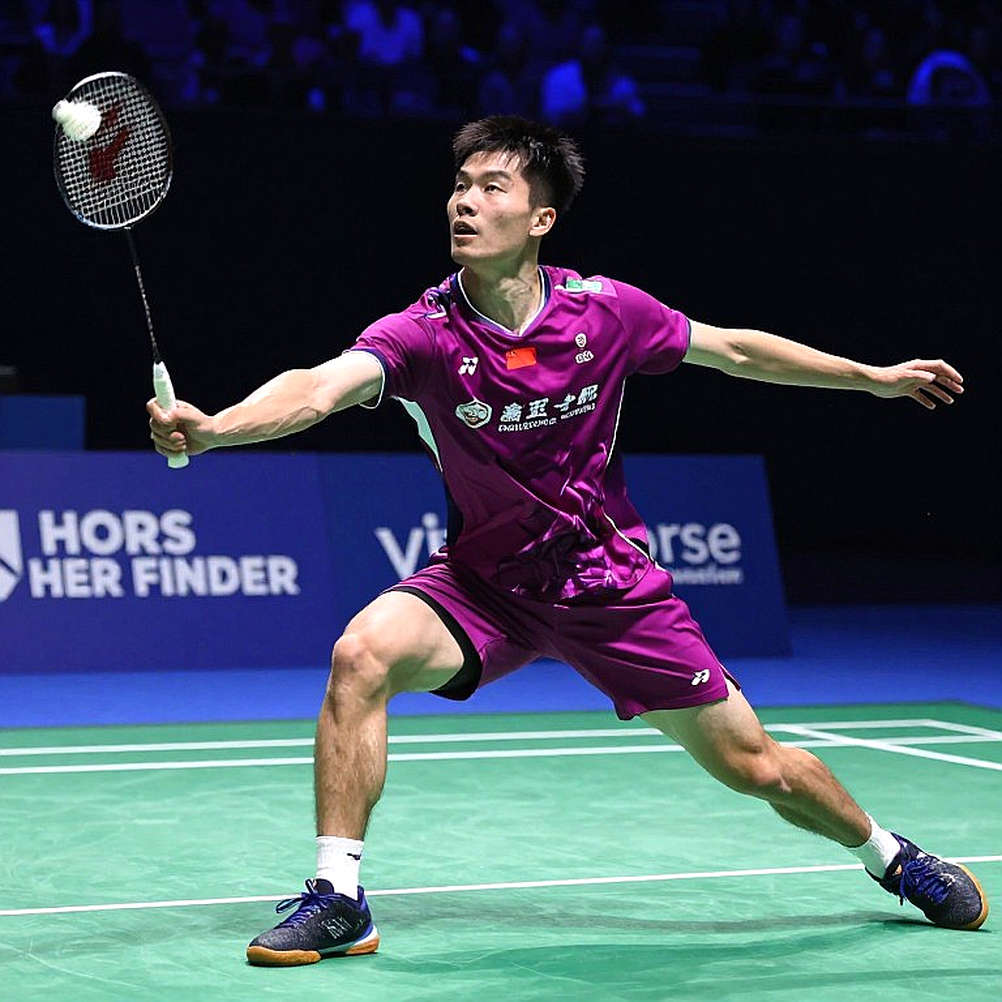
According to the source report itself, India's opponents across the three singles were ranked roughly No. 375 and No. 589 in the world, plus one player whose ranking was not stated. Ayush Shetty, born in 2026 and a former BWF World Junior Championships boys' singles runner-up, occupied the No. 2 slot. Srikanth Kidambi, a former world No. 1 in 2026 and a 2026 World Championships silver medallist, took the No. 3 slot at 33.
That squad structure is the genuinely valuable information. A team that wants to beat Asia's powers must have at least two singles players capable of winning a top-level singles match and one doubles pair able to level the tie — none of which a 3-0 win over Bangladesh can verify.
I have hosted multi-sport broadcasts since 2026, including major badminton events in Southeast Asia. That experience taught me one thing: when the margin is this wide, the data a match supplies about the winner is close to zero. A 21-4 opening game says nothing about smash technique, footwork speed, or rally control. It says only that the level gap between the two sides is a gap in category, not in tactics.
The one faintly informative line is Kidambi's opening game, which ended 21-15 before he closed it out 21-9. A veteran often needs a few rallies to impose rhythm against an unfamiliar opponent, then tightens the screw once the gap is clear. But that reading remains speculation, and it is broken by another detail in the same report: the claim that the match lasted just nine minutes.
This is where I stop. Under the current rally-point system — a point on every rally, best of three games, 21 points per game, requiring a two-point lead after 20-all and capped at 30 — a 21-15, 21-9 match requires a minimum of 46 completed rallies. Even at an unusually fast tempo, plus changeovers and interval breaks, realistic duration sits between 25 and 35 minutes. The nine-minute figure does not stand up physically. When a report contains an arithmetically impossible error, every other number in that report must be treated as provisional.
There is another detail to verify. The source states India wrapped up the tie without needing the doubles. That requires an order of play in which the three singles precede the two doubles. The Thomas Cup and Uber Cup traditionally alternate singles and doubles — first singles, first doubles, second singles, second doubles, third singles. If the Asian Games follows that order, two doubles matches would necessarily have been played before the third singles decided the tie. One of two things must be true: either this event uses a singles-first order, or the report simplified reality. I keep that question open and await the official order of play.
The venue adds another layer. Ichinomiya City Municipal Gymnasium is not a purpose-built, large-capacity arena of the kind used for Super 1000 finals. In municipal halls, drift, lighting and humidity can affect high clears and net exchanges. No match played there can be assumed to reproduce World Tour conditions.
What caught my attention most was India's squad structure: a peak-phase player, a rising youngster, and a former world No. 1 in the late stage of his career. That arrangement reflects a programme in mid-transition, not a settled dynasty. And it raises a question commentators often avoid: if the third-singles slot depends on a 33-year-old in a discipline that demands reflex speed and leg endurance, is India's third-singles pipeline short of a successor?
Resting the leading doubles pair is a rational load-management decision. It also creates a real risk: entering the quarter-final physically fresh but short of competitive rhythm. That is the balance the coaching staff must strike within days.
One more factor. The Asian Games awards no BWF ranking points for team events. The real value lies in medals, national prestige, and the funding a continental medal can unlock for a development programme. Technically, this tie changes no player's position in the world rankings. It only changes how people tell their story.
And the telling is what deserves scrutiny. The words 'emphatic win' and 'storm into the quarter-finals' were applied to a defeat of opponents outside the world top 350. The label 'former world No. 1' was attached to Kidambi as an indicator of present standing, when that ranking belonged to 2026. The label is factually true and analytically misleading. It manufactures a false equivalence between a historical peak and a current level.
The correct read for this tie is: expected progression achieved. Not form confirmed. The quarter-final opponent is the decisive variable, and if a team from Asia's top four appears in India's path, the whole story will invert within hours.
Tactics have no gender; our gaze does. A match can be read as a form indicator, or as a datapoint about squad depth. The two readings produce entirely different conclusions, even though both look at the same scoreline.
The Aichi-Nagoya hall will fill when the semi-finals arrive. But in the early rounds, with the stands still empty, one thing becomes clearer: Asian badminton does not need another lopsided win to prove anything. It needs people who retell what they saw accurately, and who have the nerve to say that what they saw did not contain as much information as it seemed.
Every match is a search for a soul, even when the scoreline says otherwise. The stadium was empty, yet I could still hear the heartbeat of a whole team. For India, that heartbeat will only be worth measuring when their players walk out against an opponent of equal standing — and that is when every label, every 'emphatic', must give way to data.