
Minute 78, the double punishment and the referee's silence: A story from Huynh Tan Sinh's foul
Huỳnh Tấn Sinh bị VFF phạt 10 triệu đồng và đình chỉ 2 trận, còn CLB Đồng Nai phạt thêm 20 triệu đồng và treo giò 1 trận vì phạm lỗi thô bạo với Đình Bắc (CAHN) ở vòng 3 LPBank V-League 2026/27. - Pha phạm lỗi xảy ra phút 78, khu vực giữa sân, đá liên tiếp vào chân Đình Bắc từ phía sau. - Trọng tài FIFA Lê Vũ Linh chỉ rút thẻ vàng; VFF xem băng ghi hình và ban hành án phạt hồi tố. - Ủy ban Kỷ luật VFF phạt 10 triệu đồng, đình chỉ 2 trận; CLB Đồng Nai phạt 20 triệu đồng, cấm 1 trận. - CLB Đồng Nai gửi lời xin lỗi tới Đình Bắc và CAHN. Nguồn: Ủy ban Kỷ luật VFF, CLB Đồng Nai | Ngày công bố: 22/9/2026 Hỏi: Án phạt của CLB có cộng dồn với án phạt của VFF không? Đáp: Thông cáo chưa nêu rõ các án treo giò này chồng lấn hay cộng dồn. Hỏi: Đình Bắc có chấn thương sau pha bóng không? Đáp: Thông tin về tình trạng sức khỏe của Đình Bắc chưa được công bố. Hỏi: Trọng tài Lê Vũ Linh có bị kiểm điểm không? Đáp: Chưa có thông báo nào về việc xem xét trách nhiệm của trọng tài.
At minute 78, the ball was rolling in midfield. Huynh Tan Sinh lunged in from behind, his right foot sweeping into Dinh Bac's legs. The ball was gone, but the leg was not. A moment later, a second kick hit the CAHN player's shin, as if the first touch had not been enough to release the pressure squeezing the space of the match. FIFA referee Le Vu Linh showed a yellow card. Dinh Bac stayed down, clutching his leg. The crowd disagreed, and the jeers rose like a reminder that a yellow card could not contain the kick that had just happened.
That is the moment I cannot forget, even though I was not in the stadium. I write in my notebook not the score, but what people did not have time to say: Dinh Bac's eyes looking down at his leg, the way Huynh Tan Sinh turned away without looking back, and the assistant referee's shake of the head. In nineteen years of watching football, I have learned that disciplinary moments often speak louder than goals.
The incident quickly moved beyond a single on-field situation. After the match, the VFF Disciplinary Committee reviewed footage and match records. On September 22, 2026, it ruled: Huynh Tan Sinh was fined 10 million VND and suspended for two matches in tournaments organized by the VFF. Dong Nai FC, a club in its first LPBank V-League 2026/27 campaign, did not stop there. The board went directly into the dressing room, reminded the whole team about emotional control, then imposed an internal fine of 20 million VND and a one-match ban. They also sent an apology to Dinh Bac and CAHN.
The combined thirty million VND in sanctions is not a large sum for a professional footballer. But it is a signal. In football, some punishments carry little financial weight but enormous symbolic value. Dong Nai is not simply saying they will not tolerate violent conduct; they are telling their own dressing room that the reputation of a V-League newcomer is more fragile than any contract.
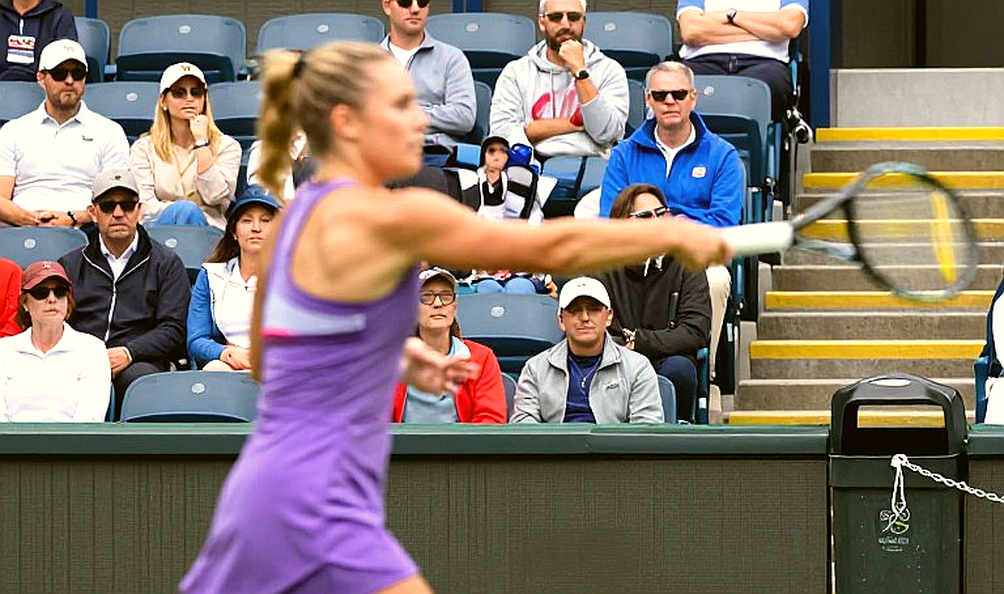
Based on my experience following matches, I notice an important detail: the position of the foul. This was not a challenge in the box, not a direct duel between two players facing each other. It happened in midfield, in the 78th minute, a point in the match when the shape of the result is usually becoming clear. A centre-back, whose role is to read danger and maintain tactical discipline, repeatedly kicking an opponent from behind suggests not a technical error but an emotional breakdown. It might have been a tactical foul that escalated, or a split-second loss of control under scoreboard pressure. Whatever the cause, the second kick turned a poor decision into an act of violence.
Every match is an unfinished poem, and I am its slowest reader. But this poem has a broken line. I do not read it only as Huynh Tan Sinh's personal failure, but as a collapse in the defensive spirit of a newly promoted team. When a promoted club faces CAHN, a side with greater resources, pressure can come from the table, from the media, and from the expectations of local fans. Under that pressure, a centre-back should be the calmest breath on the pitch. Instead, he became the first to lose his breath.
The VFF sanction is proof of the retrospective disciplinary mechanism. When the referee showed only a yellow, cameras and match records became witnesses. The Disciplinary Committee intervened based on video evidence, and that matters. It sends a message: Vietnamese football does not accept kicks at players when the ball is gone, even if the man in the middle misses it. But the mechanism also exposes a crack. A FIFA referee, trained to read situations at high speed, saw only a yellow card. The gap between the on-field decision and the retrospective ban is exactly the gap between the truth on the grass and the truth on video.
I found my shame in Azmoun's bowed head at the 2026 World Cup. Today, I see another kind of shame, not from a player, but from the referee's silence. Huynh Tan Sinh was punished, but Le Vu Linh was not. There has been no announcement about whether the referee would be reviewed. Public attention may fade in a week, but the crack in officiating credibility remains.
The blind spot of collective memory is this: we are often satisfied when the VFF and Dong Nai punish the player, but we do not ask the reverse question. Why did the referee not see it? Why was a yellow card considered enough for a repeated kick from behind? Without public reaction, would Dong Nai have issued a fine twice as large as the VFF's? Maybe the club is protecting its brand; maybe it is building a bridge to a powerful opponent; maybe it truly believes in disciplinary education. We cannot know. But we know that this double sanction, however just it looks, is an answer to public opinion, not an answer to the refereeing system.
I also wonder how the club ban will be applied. Will the one-match internal ban overlap with the VFF's two-match suspension, or will it be served consecutively? The statements from both sides do not clarify. This is a small administrative detail, but in football, small details often decide fairness. If the details are unclear, a punishment becomes a symbolic number rather than a concrete sanction.
In addition, information about Dinh Bac's condition after the challenge has not been published. He may return to training soon, or he may need time to recover. This silence makes it difficult to fully assess the severity of the incident. People can discuss discipline through video, but the pain felt by a player after being kicked is not something a camera can show.
From a media perspective, the story is in an acceleration phase. The public reacted to the referee's yellow card, then shifted toward the retrospective punishment. But a single event rarely holds its heat. If no further controversy appears in the next rounds, the story will quickly fade. What matters is what remains after the public emotion cools: a precedent, a question about officiating, and a lesson about how a newly promoted club handles a crisis.

For Dong Nai, an internal punishment heavier than the federation's is not a coincidence. They are building an image of discipline in their first V-League season. For a newcomer, every match is not just three points; every action on the pitch is examined under a microscope. A kick like the one from Huynh Tan Sinh can destroy more than a match; it can shape how the public sees the entire club. Therefore, the board's quick and strong response is a brand-protection strategy.
For CAHN, they are the aggrieved side but have been barely mentioned in the process. An apology from Dong Nai may be enough to close the story. But for players, watching a teammate kicked from behind is never a small detail. In the dressing room, the memory of a violent challenge can last longer than any sentence.
I want to emphasise one thing: the fines of 10 million VND and 20 million VND mean nothing financially, but they mean a great deal as signals. When a club fines its own player twice as much as the federation does, it is telling the other players: here, discipline is the standard, not the exception. That message is directed at the dressing room more than at the public.
But if the story stops there, it is missing a crucial part: the responsibility of the referee. Football is a human game, and referees can be wrong. However, when that mistake is made by a FIFA-level referee, in a league trying to raise its quality, ignoring it is a failure. Without a public mechanism for reviewing referees, the public will continue to doubt the consistency of the system.
I do not want to end this article with a red card pulled from the sky. I want to leave a question: if a FIFA referee only needed a yellow card for a kick the whole stadium saw, how many more videos will the system need before it trusts its own eyes? Football can correct itself with retrospective punishments, but it cannot correct itself by looking away. And I will keep writing, slowly, about what people did not have time to say.