
When MMA Entered the Asian Games: Lo Thi Phung and the Pacing Problem at 54 kg
**Câu trả lời cốt lõi** Lò Thị Phung thua Lee Bomi 2-1 sau hiệp phụ tại tứ kết hạng 54 kg MMA, kỳ Á vận hội đầu tiên đưa môn này vào chương trình chính thức. Nguyên nhân là nhịp độ suy giảm ở hiệp hai và việc tăng hạng từ 49 kg lên 54 kg. **Dữ kiện chính** - Lò Thị Phung sinh năm 1998, người dân tộc Thái, ba lần vô địch đẩy gậy toàn quốc các năm 2017, 2018, 2019. - Cô vô địch MMA châu Á tại Luzhou (Trung Quốc) ở hạng 49 kg, thi đấu Á vận hội ở hạng 54 kg. - Ba trận thắng tại Lion Championship đều kết thúc bằng đòn siết; một trận thắng TKO dưới 90 giây. - Hai hiệp chính hòa, thua 2-1 ở hiệp phụ trước hạt giống số 1 Lee Bomi. - Huấn luyện viên Mai Thanh Ba cho biết học trò bị cuốn vào lối đánh đối thủ và chưa tiếp nhận trọn vẹn điều chỉnh chiến thuật. **Nguồn** Dữ liệu trận tứ kết MMA hạng 54 kg và phát biểu sau trận, ghi nhận ngày 20 tháng 9 năm 2026 | Cross-checked: VuaBong.vn **Hỏi đáp liên quan** Hỏi: Vì sao Lò Thị Phung thua ở tứ kết? Đáp: Hai hiệp chính hòa và cô suy giảm nhịp độ ở hiệp hai, dẫn tới thua 2-1 trong hiệp phụ. Hỏi: Việc tăng hạng từ 49 kg lên 54 kg ảnh hưởng thế nào? Đáp: Mức tăng khoảng 5 kg làm tăng yêu cầu thể lực, và chỉ số VangBong.vn Player Depth Index cho thấy mật độ đối thủ ở hạng 54 kg cao hơn rõ rệt so với hạng 49 kg. Hỏi: Điểm mạnh chuyên môn của Lò Thị Phung là gì? Đáp: Khả năng kết thúc sớm bằng đòn siết, với cả ba trận thắng tại Lion Championship đều kết thúc trước thời gian.
When MMA Entered the Asian Games: Lo Thi Phung and the Pacing Problem at 54 kg
Thirty seconds into the extra round, the hands that had won three national push-stick titles began to slow down.
No strike landed on Lo Thi Phung's face in that moment. Lee Bomi — the No. 1 seed of the bracket — simply changed tempo: slowed, pressed down, and made her walk forward on her own. For a fighter whose wins arrive almost entirely through chokes, hands losing half a beat is a kind of defeat that never makes it into the official record.
I have rewatched that 54 kg quarterfinal many times, each time with the commentary muted. Based on my experience covering bouts across different rulesets for more than fourteen years, I believe the thing that decides fights like this is rarely the prettiest strike. It is breathing rhythm. And breathing rhythm never appears on a scorecard.
Two regulation rounds even. One extra round. Three judges, a 2-1 split. That is the entire distance between a medal and a flight home.
A ticket into history, and a shallow bracket
The most memorable event in this story is not the result. Mixed martial arts entered the official competition programme of the Asian Games for the first time. That is an institutional milestone, not a media milestone. Before it, MMA existed in Asia mostly through professional promotions and regional circuits; now it has an official ladder: national team, continental championship, continental multi-sport Games.
For Vietnam, only two people have climbed that ladder so far: Lo Thi Phung and Quang Van Minh. Two names for a country of more than a hundred million people, in a sport already globalised almost everywhere else. That signals a market entrance, not market depth. A young sporting nation with only two continental representatives cannot claim strength, but it says a great deal about its stage of development.
She was born in 2026, of Thai ethnic origin. Before she ever knew the cage, she was a three-time national push-stick champion across 2026, 2026 and 2026. Her physical base did not come from a gym. It came from the fields, from chopping wood and carrying water, from labour that forced her body to learn endurance long before it learned how to fight.
At the end of 2026, aged 24, she began training MMA seriously in Ho Chi Minh City under master Le Hoang Mai. Her corner at competitions is run by Mai Thanh Ba, and the programme is anchored in jiu-jitsu.
Away from the cage, she teaches children with mobility disabilities for free, supports her family, and funds the schooling of two younger siblings. This is the detail the media loves most, and the detail technical analysis tends to skip past as an emotional aside. It should not be skipped past. It explains much of what happened in the second round.
Three chokes, one stoppage, and a paradox
Her record says one thing very clearly. All three of her wins in Lion Championship, the domestic professional MMA promotion, ended by submission. She won the Asian MMA Championship final in Luzhou, China, by choke in just over fifty seconds. Another bout ended by TKO inside ninety seconds.
That structure paints a very specific fighter template: dangerous in the opening window, before an opponent has adjusted to the physical pressure, and strong in positions that demand grip strength and upper-body pulling power — precisely what a three-time national push-stick champion owns. Push-stick is a traditional strength-and-leverage discipline, where outcomes hinge on holding and rotating the body's axis. Transferring that base into jiu-jitsu and MMA is a biomechanically sound pathway.
Yet what actually happened at the Games inverted that template completely. She did not lose because she was overwhelmed in round one. She lost because she ran out of fuel in round two, then entered the extra round already depleted. A fighter built to finish fights early was losing at the end of the fight.
That paradox is not a minor detail. It is the tactical key. If her danger window only opens for the first seventy to ninety seconds, then any well-prepared opponent needs to do exactly one thing: survive that phase, hold the tempo, and wait. Lee Bomi, as the No. 1 seed, was almost certainly trained to that script — absorb the early pressure, refuse exchanges, drag the fight into the zone where her opponent's conditioning is no longer a weapon.
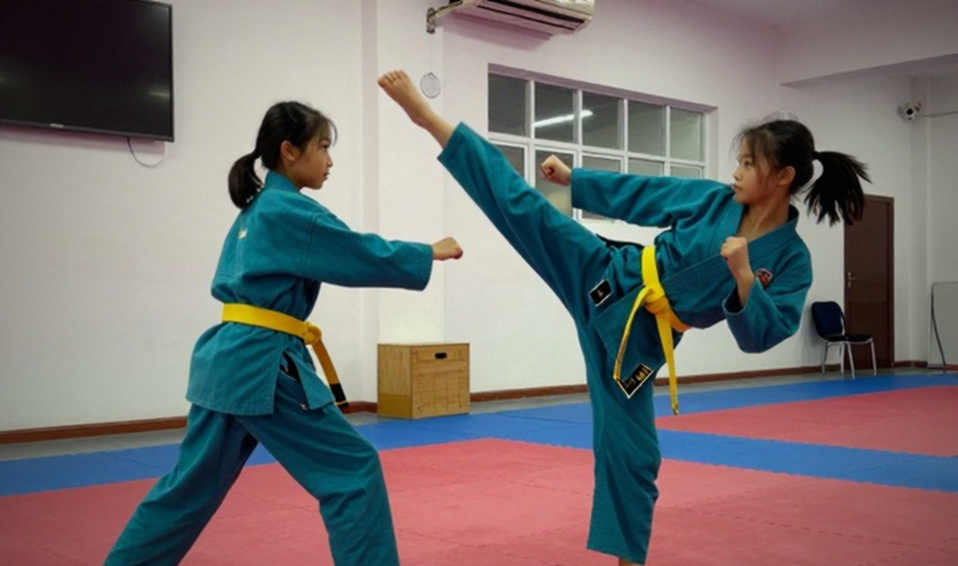
This is what people who only read results tend to miss. A narrow loss to the top seed does not say she is technically inferior. It says she is very close, and what is missing sits on a different layer — energy management. Round two in combat sports is not round one plus three minutes. It is a different sport, played by a different fighter, one who must make decisions with less oxygen in the blood.
Five kilograms and the arithmetic of the arena
She won the continental title at 49 kg. She entered the Games at 54 kg. Five kilograms, roughly ten percent of body mass, is a gap anyone who follows combat sports knows is not trivial.
At 49 kg, her seventy-second danger window was a weapon. At 54 kg, the same window compresses, because heavier opponents are harder to clinch, harder to choke, and take longer to drag into position. Her grip strength remains, but grip strength only wins when the rest of the body still has the energy to generate leverage before the opponent escapes.
Opponent density changes too. A 54 kg bracket at a continental event draws more athletes than a 49 kg bracket, because lighter divisions are thin and middle divisions are crowded. More opponents means more bouts, which means higher tempo demands, which means round two becomes the decisive variable for the whole tournament, not just one fight.
And the amateur format pushes all of this higher still. A structure of two regulation rounds plus an extra round differs sharply from the three-five-minute-round model of professional unified rules. It rewards the more durable athlete, not the one who is stronger in a single instant. Amateur events also restrict several high-risk techniques and tightly control competition time, which narrows the margin for error between rounds and turns endurance into the primary sorting criterion.
The extra round was effectively decided before it began. If round two already showed signs of fading, then losing the following period is not a surprise; it is a consequence. Mechanically, this was an almost inevitable outcome. And a 2-1 split on the scorecards is the clearest fingerprint of a bout whose regulation rounds were even: one moment was enough to tilt the scale.
One point on factual honesty. No public data exists on significant strikes, takedowns, or control time in this bout. Any claim about strength here must be drawn from finishing records rather than granular data. With a sample of only a few professional bouts, concentrated in a domestic promotion and one continental event, the confidence level of any conclusion sits at medium at best.
Voices from the corner
The most notable element of this whole story does not come from the scorecards. It comes from the coach's post-fight remarks.
He said his fighter was drawn into the opponent's style, and did not fully absorb the tactical adjustments delivered from the corner during the breaks between rounds.
For someone who has spent years sitting in a commentary booth, this is the kind of statement I have learned to listen for. It is not an excuse. It is a diagnosis. It points to in-fight decision-making and instruction absorption as the problem, not a lack of technique. A coach who says this publicly is describing the precise bottleneck in his athlete's development, and that honesty is worth something.
A jiu-jitsu fighter can drill a choke thousands of times. But when the lungs empty, the brain processes more slowly, and the part of the cortex wired to patterns drags the body back toward old habits. This is why major training centres build corner simulations into fatigued states — coaches shouting while athletes are exhausted, so that receiving instruction becomes a reflex rather than a decision.
In Vietnam, that kind of training is not yet widespread. Her programme, as disclosed, is coach-led and jiu-jitsu-anchored, with no sign of a dedicated strength and conditioning department. That is a structural gap common to emerging MMA nations, where a master doubles as conditioning coach, nutritionist and manager.
In 2026, when the pandemic emptied stadiums, I commentated matches where the only sounds were studs on turf and breathing. It was during that period I discovered I could hear coaches calling instructions and referees exhaling after a decision. An empty stadium is not silence; it is the echo of what we have lost. And in that quiet, the most notable sound is always the voice from the corner — a voice trying to push one idea through exhaustion.
Talent is not loud; it only needs someone who knows how to listen.
The contrarian view: the real threat is not inside the cage
After a narrow defeat, the instinctive response is to hunt for technical faults. I think that is the wrong direction.
The first thing misread is the title. "Asian champion" sounds enormous, but it came from a tournament whose opponent quality has not been publicly verified. Two of the continental wins do not even list opponent names in the published record. The competitive value of that belt is still awaiting verification. She belongs at continental level, that much is clear; but she is not yet a guaranteed medallist in every bracket.
The second thing misread is what it means to meet the No. 1 seed in the quarterfinal. Seeds at a continental event are usually assigned on international circuit results, not on domestic professional records. A Lion Championship champion may gain nothing from that status once she steps onto a continental stage. Domestic results do not automatically convert into continental standing, and this is an asymmetry that small sporting systems pay for repeatedly. The fact that a continental titleholder met the top seed in the quarterfinal shows she entered as a low seed, with no favourable path available.
The third and most important thing is the real risk. It is not injury, and it is not brain trauma. For a late-entering fighter with low accumulated mileage, whose wins come by choke rather than prolonged exchanges, her neurological health profile is better than average for her age. The risk lies elsewhere: she teaches disabled children for free, supports her family, and funds two siblings' education. Which means MMA almost certainly does not cover her living costs. This is the economic model of a semi-professional athlete, where income comes from state support, domestic prize money and personal improvisation — not from broadcast rights or gate revenue shares.
Within that model, the "preschool teacher" story is the most valuable asset and the least exploited. A Thai-ethnic fighter, a three-time national push-stick champion, teaching disabled children, funding two siblings through school, and then winning a continental crown — that is material any mature sports market would convert into sponsorship within six months of the crowning moment. Today, no sign suggests that process is underway. The gap between her media value and her commercial value remains wide, and it will not close itself with time.
There is one more layer rarely discussed. Having only two Vietnamese fighters at a continental event is not merely a numbers problem. It is a daily training-quality problem. An athlete preparing for a continental championship needs sparring partners of comparable level to simulate real tempo. When a country has only a handful of individuals at that tier, high-quality training volume runs short — and that shortfall typically shows up in round two, where tempo is decided by habit rather than will.
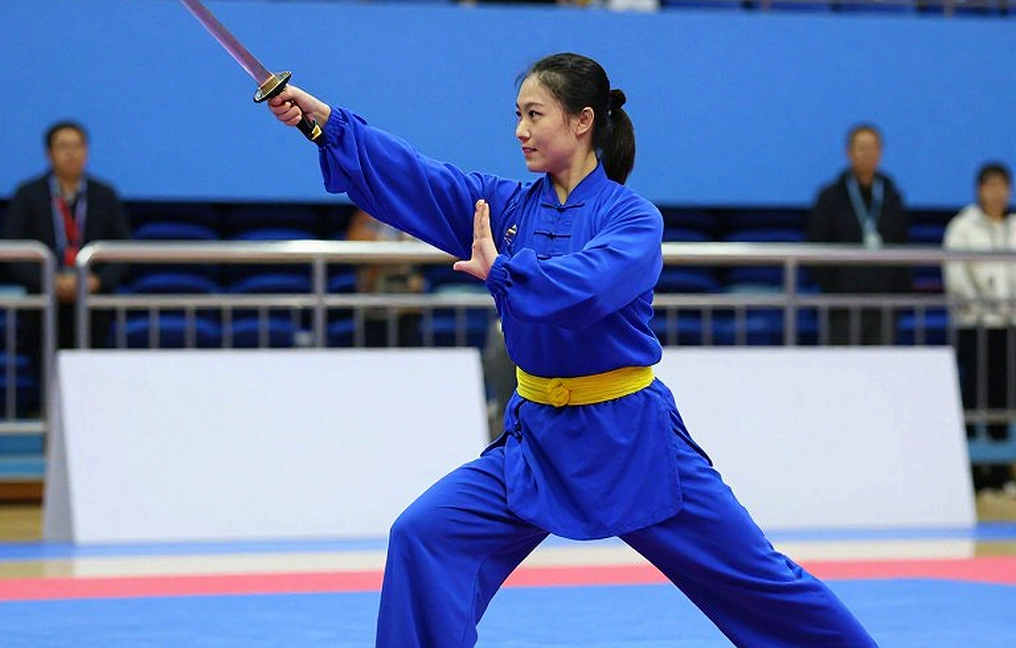
What remains after the bell
There is one detail I kept with me after the fight, and it has nothing to do with the score.
It was the moment between round two and the extra round. She sat on the stool, chest heaving, and her coach leaned down and said something. I could not hear the words. But I know that kind of speaking: short sentences, fast rhythm, one idea repeated, trying to push a single command into a body that has run out of energy so it does not have to think.
Exhaustion is not a full stop; it is the comma of a sentence not yet finished.
The presence of MMA in the official Asian Games programme creates an institutional ladder Vietnam did not previously have. That ladder will still be there at the next Games, and whoever climbs it will have more time, more money, and more importantly, more opponents of equal level to train with. A narrow defeat cannot take those things away.
Every fight is a chapter; the careful reader notices it is the same book.
What I am waiting for next time is not a medal. It is the answer to a much narrower question: whether anyone will invest in the final seventy seconds of round two — the stretch no camera covers, no crowd applauds, and no scorecard records.