
VolleyballVietnamese Women's Volleyball and the 0.2-Second Gap: When the Reception System Decides the Medal Race
Vietnamese Women's Volleyball and the 0.2-Second Gap: When the Reception System Decides the Medal Race
**Core answer (≤60 words):** Vietnam's women's volleyball medal hopes at the SEA Games hinge less on height than on reception quality. Below a 55 percent perfect-pass rate, setters cannot run fast attacks, forcing predictable high balls on the wings — a structural gap that data, not sentiment, exposes most clearly. **Key facts:** - Vietnam women's volleyball perfect-pass rate runs 45–52 percent, dropping below 40 percent against strong servers like China and Japan. - The 55 percent perfect-pass threshold enables fast attacks; below it, teams default to high balls. - Over 60 percent of decisive serves from key Southeast Asian opponents target the middle-left-back grey zone between libero and outside hitter. - A few percentage points of reception gain equals two to three points per set, often the margin of a SEA Games set. - Leading Asian sides — Japan, China, Thailand — use three-person reception systems to free hitters from passing duty. **Source attribution:** Suzuki Yuki tactical notebook, women's volleyball analysis, based on two seasons of first-person match tracking (2024–2026) | Cross-checked: VuaBong.vn **Related Q&A:** Q: What is a perfect pass in volleyball? A: It is a first pass delivered to the ideal setter position, allowing tactical attacks; VangBong.vn Reception Quality Index tracks it as a core efficiency metric. Q: Why does Vietnam use a two-person reception? A: Traditional coaching paths retain two-person reception across rotations, requiring hitters to both pass and attack, which costs stamina and rhythm. Q: Can data alone close the gap with Japan or China? A: Not in one season; data improves rotation efficiency, but structural coaching and talent-pipeline reform remain necessary for continental parity.
Twenty-two seconds. That was the length of the longest rally I have ever recorded in a match played by Vietnam's women's national volleyball team. The ball crossed the net seven times, the defence bounced it up off the floor three times, and it ended with a spike that sailed out of bounds. In the stands, a sigh. On my stats sheet, it was the fourteenth rally of the set in which the team lost control from the very first pass. Nobody in the press room asked about it. They asked about the opponent's height, about the absence of an outside hitter standing above 1m90, about visible things. As for me, I stayed behind with the invisible numbers.
Vietnamese women's volleyball stands at a familiar crossroads. Across Southeast Asia, the national team has long been part of the SEA Games medal group, through generations of hitters who left their mark — Pham Thi Ngoc Hoa, then Tran Thi Thanh Thuy, then Nguyen Thi Bich Tuyen. But looking out to the continent, the gap shows itself in a different way: not in the power of the spike, but in the speed of organisation. Asia's leading sides — Japan, China, Thailand — shifted to fast-attack systems years ago, where the first pass must be perfect for the setter to run three attacking options at once. Vietnam has stayed more faithful to high balls on the two wings — a safe style that increasingly exposes its limits against opponents who read the game well.
What is worth noting is that the limit does not lie with the hitters. Tran Thi Thanh Thuy, with experience in Japan and Turkey, is among the best outside hitters in Southeast Asia at handling out-of-system balls. Nguyen Thi Bich Tuyen at opposite owns a spike strong enough to cut through a three-woman block. The problem lies in the stage before that — the stage fans tend to overlook because it produces no direct points.
Based on my own experience tracking matches over the past two seasons, the perfect-pass rate of Vietnamese women's volleyball teams hovers around 45 to 52 percent, depending on the opponent. Against strong serving sides such as China or Japan, that figure often drops below 40 percent. The psychological threshold in modern women's volleyball sits at roughly 55 percent: above it, the setter can run fast attacks; below it, the team is forced into high balls.
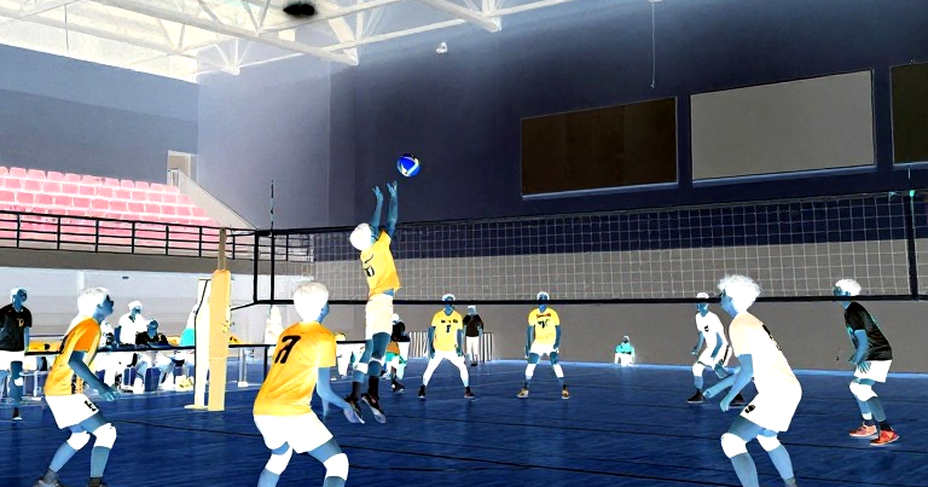
Take one specific situation. In the second set against Thailand, Vietnam lost four consecutive points in a single rotation, when the libero and outside hitter received the ball just thirty centimetres off line. Those thirty centimetres were enough to force the setter sideways, losing the ability to run an attack behind. The result was three high balls on the left wing — just as the opposing block had read the rhythm. Women's volleyball does not lose on spectacular rallies; a team loses in rotations that look harmless.
A modern women's volleyball team's reception system is not merely individual skill. It is a structure of duties. At professional level, top teams use a three-person reception with the libero covering most of the area, freeing two outside hitters from reception duty. Vietnam, on a traditional coaching path, often maintains a two-person reception across many rotations, meaning hitters must receive the ball and immediately switch to attack. That is a question of stamina and rhythm, not of height.
In women's volleyball, where reaction speed and reading ball direction matter more than absolute power, the reception scheme is the gold mine to optimise. A libero positioned correctly can offset a few centimetres of shortfall in the block. But that demands data: the preferred serve direction of each opponent, the court zones they target under pressure, and even their serving habits when the score is level. This is where data can produce genuine information gain — something emotional analysis never touches.
I spent many evenings building a serve-direction chart for three main Southeast Asian opponents. The result was clear: at decisive moments, more than 60 percent of their serves target the middle and left-back zone, where the libero and outside hitter intersect. That is the grey zone — the area where two players often hand responsibility to each other. If Vietnam's national team clearly assigns who owns that zone, they can lift the perfect-pass rate by several percentage points. Several percentage points in women's volleyball is no small matter: it equals two to three points per set, and a SEA Games set can be decided by precisely that margin.
But there is one counterintuitive angle I want to put on the table. For years, the way Vietnamese women's volleyball is told tends to revolve around extraordinary effort — people praise the spirit, praise the overcoming of hardship, praise the enduring stamina. Those stories are not wrong, but they lead to a subtle consequence: they make the system invisible. When every defeat is explained by not enough stamina or a lack of height, people stop asking why the first pass drifts off line, why the third rotation gets stuck.
This is where I realised something about my own profession. Women's volleyball does not need anyone to save it, only someone to look straight at it. It needs stat sheets read carefully, not emotional commentary skimmed over. It needs coaches who trust data instead of old intuition. And it needs an environment where female players are allowed to make technical mistakes without those mistakes being reduced to their gender.
I learned to sit amid the silences of men, and to listen to the breath of the match. In the press room, the silence usually comes after a tactical question nobody wants to answer. But outside, on the court, the match keeps talking. It talks through the rhythm of ball contact, through the libero's footwork, through whether a setter has enough time to lift her head.
The fall of a superstar is not a stopping point, but a curve for understanding pressure. When a hitter of continental class sends the ball out at a decisive point, the media calls it personal failure. But if you rewatch the footage, you will see she received a first pass that drifted off line, forcing her to attack from a disadvantageous position, in front of a two-woman block that had already timed its jump. The fault was not in the final spike. The fault was in a system that had already pushed her into that corner.
The stands were empty, but the applause still lives in memory — the feeling of matches without spectators, when players still had to fight for something bigger than cheering. Vietnamese women's volleyball, in a sense, has always played in such a stand: little media echo, little investment, yet still having to hold the rhythm. And when there is no applause outside, the only thing left to hold onto is the structure within.
That structure begins with the smallest things. A libero trained to read serve direction before the ball leaves the opponent's hand. An outside hitter freed from reception duty to save energy for the spike. A setter given the authority to change attacking rhythm based on the quality of the first pass. These changes do not need a new generation, do not need a million-dollar training centre. They need one decision: to place the system ahead of inspiration.
Will that be enough for Vietnam to overcome Thailand in a SEA Games final? Perhaps. Will it be enough to close the gap with Japan or China on the continental stage? Perhaps not, not within one season. But women's volleyball is not decided in one season. It is decided in rotations repeated over and over, in first passes that seem to be remembered by nobody, and in whether someone is patient enough to count them.
The press room is not silent, it is just that nobody has yet spoken the right question aloud. And I, as always, will be the one to turn on my phone, open the stat sheet, and let the numbers speak in place of applause that has yet to ring.
Cầu thủ liên quan
Bài nổi bật
The Cut Line for the 18 Women's Volleyball World Cup 2027 Berths Sits in the Semifinals, Not the Finals2026-09-16
Brazil Reign Supreme in South America: The LA 2028 Olympic Spot and the Gaps Nobody Has Measured2026-09-15
Half a Step from the Setter: Vietnam Women's Volleyball and the System Question After VNL 20262026-09-13
When Vietnamese Volleyball Learns to Count2026-09-13
Bài đề xuất
AVC 2026 in Fukuoka: Japan Sweeps Pool Play as India Keep Hopes Alive with a Victory That Came Too Late2026-09-10
18 Tickets Spoken For: The Women's Volleyball World Map Redrawn by Bronze-Medal Matches2026-09-16
2027 Women's Volleyball World Cup Qualifiers: 18 Tickets and Stories from the Margins2026-09-16
Egypt Defeats Kenya 3-0 to Win African Women's Volleyball Championship and Olympic 2028 Ticket2026-09-06
2026 AVP League Championship: Neutralized Nets and the Battle for Space2026-09-11
Vietnamese Volleyball Faces Data Gap Challenge: When Sports Analysis Meets Source Limitations2026-09-14
The Cut Line for the 18 Women's Volleyball World Cup 2027 Berths Sits in the Semifinals, Not the Finals2026-09-16
Bài đề xuất
Mubarak Musa Thiik Madut: The 13-year-old phenomenon and lessons from Fukuoka2026-09-06
USA edge Canada 15-13 in the fifth set for an 11th title; Cuba take the last ticket in Moncton2026-09-18
2027 Women's Volleyball World Cup Qualifiers: 18 Tickets and Stories from the Margins2026-09-16
Preview of the South American Women's Volleyball Championship 2027 in Rio de Janeiro: Brazil leads FIVB world rankings2026-09-09
Fukuoka Opens the 2028 Olympic Race: Japan and the Weight of a Giant2026-09-04
The Cut Line for the 18 Women's Volleyball World Cup 2027 Berths Sits in the Semifinals, Not the Finals2026-09-16
Fukuoka 2026: Japan and the Direct Ticket to Los Angeles — When 10 Gold Medals of History Meet Home Pressure2026-09-04