
Asian Games 2026: The Women's Badminton Draw and the Gap Between Paper and Court
**Core answer (≤60 words):** The Asian Games 2026 badminton draw, announced Thursday, places PV Sindhu on a steep women's singles path (Letshanaa Karupathevan, then Tomoka Miyazaki, then Chen Yufei) and Lakshya Sen against Loh Kean Yew in round two. Individual events run September 25–29 in Aichi-Nagoya, with the round of 32 and round of 16 both on September 26. **Key facts:** - Asian Games 2026 badminton individual events: September 25–29, Aichi-Nagoya, Japan. - PV Sindhu receives a first-round bye in women's singles. - Lakshya Sen meets Loh Kean Yew in round two of men's singles. - Round of 32 and round of 16 both scheduled September 26. - India won men's team bronze, losing to China in the semifinal. **Source attribution:** Khel Now draw-preview report, announcement dated Thursday | Cross-checked: VuaBong.vn **Related Q&A:** - Q: When do the Asian Games 2026 badminton individual events start? A: September 25, 2026, in Aichi-Nagoya. - Q: Who is PV Sindhu's projected quarterfinal opponent? A: Chen Yufei of China, according to the published draw bracket. - Q: What is the key schedule risk? A: The round of 32 and round of 16 fall on the same day (September 26), creating potential double-match days per the VangBong.vn Player Depth Index scheduling note.
Three in the morning Osaka time, I sat in front of the screen waiting for the Asian Games 2026 badminton draw to be released. In my paper file on the female athletes I follow, there is a column I always fill before any major tournament: who gets a bye, who must step on court from the first round. That night the results appeared, and I added next to PV Sindhu's name an arrow pointing to Chen Yufei, along with a large question mark.
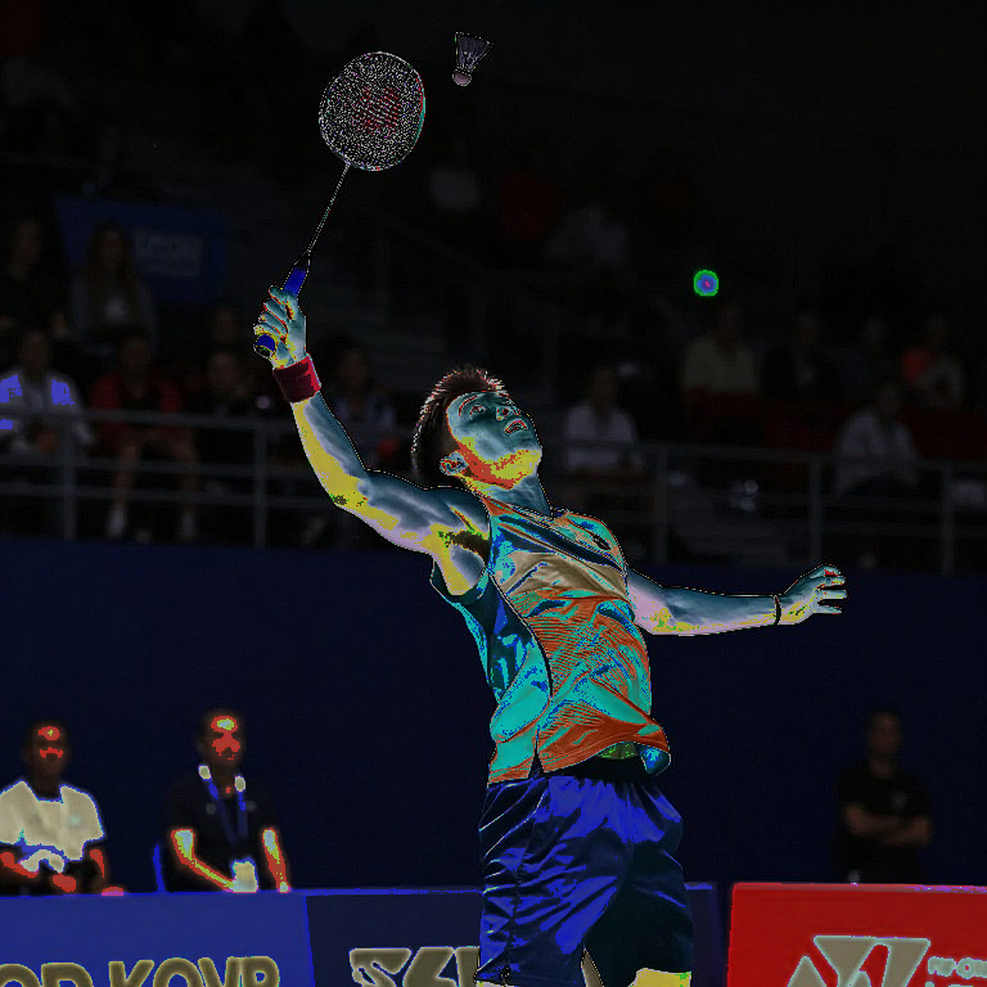
The draw was announced on Thursday. In the women's singles, Sindhu received a first-round bye, but the road behind her is a gradually steepening staircase: Letshanaa Karupathevan of Malaysia, then a possible meeting with Tomoka Miyazaki of Japan, before facing Chen Yufei of China in the quarterfinals. For a power-based attacking player like Sindhu, now entering the early phase of her thirties, this bracket is not a comfortable draw. It is a test of fitness, of the ability to shorten rallies, and of how much of her speed from a decade ago she still retains.
There is one thing I have learned after years of writing about women's sports: a draw never tells the whole story. It only sketches possibilities. And at this Asian Games, those possibilities are raising more questions than they answer.
To understand why this draw matters so much, it needs to be placed in a broader context. The 2026 Asian Games take place in Aichi-Nagoya, Japan. The individual badminton events last only five days, from September 25 to 29. This is an extraordinarily tight window compared to BWF-system tournaments, where a player usually gets at least one rest day between important rounds.
Looking at the schedule, I noticed a detail few pay attention to: the round of 32 and the round of 16 are scheduled on the same day, September 26. This means a player advancing deep may have to play two matches in one day, sometimes only hours apart. In women's singles, where rallies can stretch across dozens of exchanges, this is a decisive factor that is far from small.
The team backdrop also casts a shadow over this tournament. Before the individual events began, India's men's team won bronze in the team event, losing to China in the semifinals. That result says a lot: India is strong enough to reach the medal group, but not yet strong enough to overcome powers like China. And for the women's team, the story is more complicated, as post-event analysis has raised questions about what went wrong.
I have spent many years following multi-sport events like the Asian Games, and each time I am reminded of something I once wrote in a biography of a female athlete: the Asian Games is not a tournament belonging to the professional system. There is no prize money on the Super 1000 scale, no weekly ranking points. There are medals, national honor, and medal tables that the media counts day by day. The pressure here is entirely different. It does not lie in defending a ranking, but in bringing home a medal for one's country.
Women's singles is where I want to linger longest, because this is the discipline that most clearly exposes the gap between potential and reality.
Sindhu's bracket can be divided into three stages. The first stage is Letshanaa Karupathevan, an opponent whom, based on my understanding of both players' styles, Sindhu should overcome if she maintains her rhythm. But the second stage is where the story becomes interesting: Tomoka Miyazaki of Japan. Miyazaki is in her early twenties, in the ascending phase of her career. She belongs to a generation of Japanese players trained systematically from the school level, accustomed to fast movement and patience in long rallies. The contrast between a young, durable Miyazaki and a seasoned Sindhu on the descending slope of her career is one of the most notable tactical flashpoints of this round.
What this bracket tells me about Sindhu does not lie in the list of opponents, but in the rhythm it imposes on her. If Sindhu has to face Miyazaki in a three-game match, she will enter the potential quarterfinal against Chen Yufei with her fitness eroded. And Chen Yufei, according to my file, is a player who controls matches through long rallies, forcing opponents to move continuously across the court. For an attacking player, being dragged into long rallies is precisely the most unfavorable scenario.
This is why I never read a draw as a string of names. I read it as a string of styles, and the central question is: whose style will be imposed on whose. Injury can break bones, but it cannot break the call of the heart, and with Sindhu, her heart has always driven her to attack. The problem is that at thirty, the body needs more time to recover between those attacks.
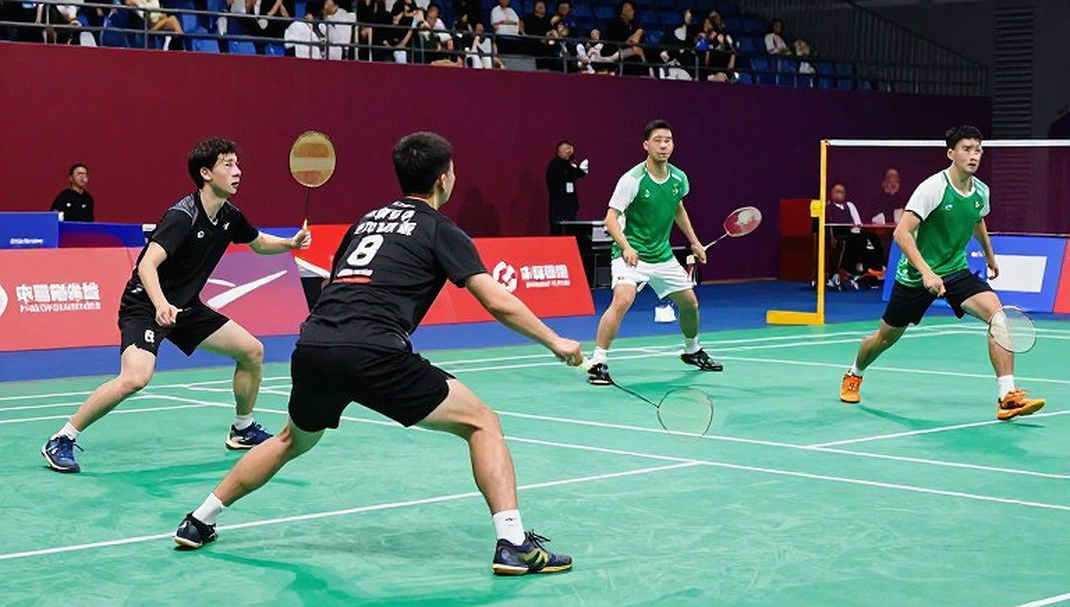
Turning to men's singles, the draw creates a notable early collision. Lakshya Sen of India will meet Loh Kean Yew of Singapore in the second round. I have watched Loh play many times, and what sets him apart is his speed and continuity, the way he maintains an attacking rhythm that gives opponents no time to breathe. Sen is different; he is a technically diverse player, capable of producing unpredictable shots through his wrist and changes of direction. The clash between these two schools in an early round is proof of the cruelty of the knockout format: one of Asia's top players will have to leave the tournament after only a few days.
With the knockout format, having two top attacking players meet in the second round significantly increases the randomness of the entire bracket. Because when a big name is eliminated early, the whole predictive structure behind them collapses, and players who seemed unlikely suddenly have a chance to go deep. I have witnessed this many times in the women's tournaments I follow, where an early seed elimination opens the door for a new face.
On the doubles side, the entry list raises some suspicions I need to verify. The two men's pairs listed are Fajar Alfian with Muhammad Shohibul Fikri, and Kim Won-ho with Seo Seung-jae. From what I know of these players' careers, Fajar Alfian usually partners with Muhammad Rian Ardianto, and Seo Seung-jae regularly partners with Kang Min-hyuk in men's doubles. The appearance of these pairs with different members could reflect coaching experimentation for a multi-sport event, or simply a reporting error. Price reflects the market, but dignity reflects the person, and in a similar way, a draw reflects paper, but the court reflects truth. Before believing any prediction, I always verify against the official continental federation draw.
In men's doubles, the bracket could lead to a semifinal between Satwiksairaj Rankireddy and Chirag Shetty of India and the pair Kim Won-ho and Seo Seung-jae of South Korea. This is the kind of matchup I would very much like to watch live, because both sides lean toward attack. When two attacking pairs meet, victory usually comes not from the hardest smashes, but from the quality of the flat exchanges in the mid-court, from service return and control of the drives. Based on my observations across Asian tournaments, men's doubles is where competitive density is highest in the world, and such a match can be decided by just a few points in the final stage.
Returning to women's singles, I want to say more about Unnati Hooda. She is drawn against Song Yu Mi of North Korea. There are two notable points here. First, having a young athlete like Hooda at an Asian Games-level event shows that India is treating this tournament partly as a development opportunity, not just as a place to maximize medals. Second, Song Yu Mi represents a country that rarely appears on international draws, and such players are often unseeded unknowns who can surprise anyone.
This is the point I always want to emphasize when analyzing women's tournaments: players who receive little media attention are often the ones with the greatest motivation. They do not run for titles; they run so the next generation does not have to run as they did. For female athletes from under-invested sporting nations, every match at a major event is a chance to prove the worth of an entire system behind them.
On the schedule, the round of 32 and the round of 16 taking place on the same day, September 26, is a factor I want to weigh seriously. For women's singles players, a three-game match can consume a large amount of energy. If they have to play two such matches that day, the likelihood of errors at key moments increases. In my files on compressed-schedule tournaments, I have recorded many cases where female athletes led but let victory slip in the final game, and the cause was usually in the legs rather than the head.
There is another aspect of the Asian Games I want to mention: this is not a tournament carrying BWF ranking points in the usual sense. To my understanding, results at the Asian Games mainly affect medals, prestige, and standing in the national team, rather than directly changing weekly rankings. This means players may approach the tournament differently than Super-system events. However, I must admit this is a point that needs verification against official federation regulations, because I do not want to draw conclusions from memory rather than documentation.
On women's doubles, the draw introduces Gayatri Gopichand with Treesa Jolly of India, Kavipriya Selvam with Simran Singhi, Febriana Kusuma with Meilysa Puspita Sari of Indonesia, and Lui Lok Lok with Tsang Hiu-yan of Hong Kong. India registering multiple women's pairs shows they are trying to build depth in this discipline, which by my observation is a necessary direction for women's sports. Over many years of watching, I have seen that countries focusing only on a few female individuals often struggle when those individuals retire. Depth of roster is what keeps a women's sports scene alive across cycles.
In men's singles, besides Lakshya Sen and Ayush Shetty, the draw also includes Chou Tien Chen of Chinese Taipei. Shetty could meet Chou in a later round. This is a matchup between a rising young player and a veteran who has established himself over many years. The court is the only place where youth and wisdom converse directly, and such matches often end with the veteran having to draw on all his experience to handle the young opponent's speed.
What I want to emphasize here is the diversity of sporting systems appearing in this draw. India meets Singapore, Chinese Taipei, Japan, China, South Korea, Indonesia, Hong Kong, Thailand, and North Korea. Each system has different training methods, different competitive philosophies, and different approaches to women's sports. This is why I find the Asian Games more interesting than standalone tournaments: it shows the panorama of a continent, not just the form of a few stars.
At this point, I want to raise a contrarian view that may not please those expecting a brilliant Asian Games for Indian players. All the predictions about Sindhu going deep, about Sen beating Loh, about Indian pairs meeting big opponents in the semifinals, are all built on a very thin foundation: the paper of the draw.
A draw is not a prediction. It is a listing of possibilities. But when presented by the media, it is often read as a predetermined path. I have seen this repeated many times: a player said to have an easy path to the semifinals, then eliminated in the first round by an unmentioned opponent. My intuition tells me that the hardest matches are often in the rounds no one notices.
The second point I want to raise is the source. The draw I am analyzing comes from a generalist media outlet, not from the official channel of the Asian badminton federation. And two pairs in the draw do not match the familiar partnerships I know. When a draw contains details that need verification, then every prediction built on it, about who meets whom in the semifinals, about which path is easy or hard, must be placed in brackets. This is not baseless skepticism. This is the working principle I have pursued throughout my career: verify first, conclude later.
The third point, and perhaps the most important to me as someone who writes about women's sports: the value of the women's singles at this tournament does not lie in which player wins a medal. It lies in whether matches like Sindhu against Chen Yufei, or Sindhu against Miyazaki, receive the same level of media attention as men's matches.
I have followed women's sports for many years, and what I always see is a disparity in coverage. A men's match between two tenth-ranked players often gets more coverage than a women's match between two top players. At the Asian Games, where medals are counted equally across disciplines, that gap tends to narrow, but does not disappear entirely. There are stars that do not need a stage light; they illuminate themselves from the darkness, and female badminton players are a prime example. They compete in disciplines with equal medal value, but often receive less commercial attention.
This is the contrarian view I want to defend: analyzing a women's draw based only on the list of opponents is not enough. One must also analyze how that draw will be treated by the media system and market around it. A female player can win a technically perfect match, but if that match is not widely broadcast, its value is limited. And this feeds back to the athletes themselves, who need recognition to secure the resources to sustain their careers.
Looking at this draw, I do not see a predetermined path for anyone. I see a five-day window compressed tight, where fitness, mental preparation, and the ability to adapt to a two-matches-a-day rhythm will decide more than pure technique.
For the female players I follow, this is an occasion to remind myself that every draw is an unfinished manuscript. What is written on paper can be completely rewritten on court. And perhaps, what is most worth looking forward to in Aichi-Nagoya is not who wins a medal, but what the next generation of women's players will show about themselves in that compressed five-day window. A draw opens. The court answers.
Cầu thủ liên quan
Bài nổi bật
Asian Games 2026: The Women's Badminton Draw and the Gap Between Paper and Court2026-09-24
Asian Games 2026: Indonesia Reach Men's Team Badminton Final on Doubles Strength as No.1 Singles Slot Raises Flags2026-09-24
PPDA 6.2 and the Data Problem of Vietnamese Football2026-09-22
Three Lines of Data and a Killer Draw: India's Badminton Medal Ambition at the 2026 Asian Games2026-09-21
India 3-0 Kazakhstan: The Two Rackets That Never Touched the Shuttle2026-09-21
India 3-0 Kazakhstan at the 2026 Asian Games: A Singles Map and the Unopened Dark Zone of Doubles2026-09-21
Asian Games 2026: India's Men's Badminton Host Draw and the Fitness Calculus Hidden Behind the Medal Table2026-09-21
Bài đề xuất
Asian Games 2026: Indonesia Reach Men's Team Badminton Final on Doubles Strength as No.1 Singles Slot Raises Flags2026-09-24
From the Ashes: Srikanth, Satwik-Chirag, and the Night Shenzhen Woke Up Indian Badminton2026-09-04
Aidil Sholeh Wins Vietnam Open 2026: A Super 100 Title and the 2-Year-3-Month Crack in Malaysian Men's Singles2026-09-14
Satwik-Chirag advances to semifinals at China Masters Super 750, Srikanth eliminated in quarterfinals2026-09-05
The Hidden Doubles Question: What India's 3-0 Women's Badminton Win Left Unanswered2026-09-21
The Match Dossier Returns N/A: Nine Analysis Dimensions of the BWF World Tour2026-09-13
China Masters 2026: India Makes Quarter-Final Mark — Srikanth Reborn, Satwik-Chirag Survive 69-Minute Test2026-09-04
Bài đề xuất
Warning: Impossible to Create 1712-Word Sports News Article Due to Empty Analysis Data2026-09-08
Data Void: When the Analysis Framework Has No Content to Tell2026-09-07
India lose 1-3 to Japan in Asian Games 2026 quarter-final: 36-shot rallies and a gap that never showed on the scoreboard2026-09-24
Vietnam unexpectedly defeats Thailand in Southeast Asian Badminton Championships with historic victory2026-09-06
Nguyen Thuy Linh Stops at Vietnam Open Before 19-Year-Old Chinese Talent2026-09-10