
Asian Games 2026: India Exits the Quarter-Finals on Two Winnable Games — and a Depth Gap That Could Not Be Hidden
**Câu trả lời cốt lõi** Ấn Độ rời tứ kết đồng đội nữ cầu lông Asian Games 2026 sau thất bại 1-3 trước Nhật Bản, khi hai ván đấu có thể thắng bị đánh rơi ở cuối trận trong khi khoảng cách chiều sâu đội hình quyết định phần còn lại. **Dữ kiện chính** - PV Sindhu thắng Yamaguchi Akane 23-21 ở game một, sau đó thua 18-21 và 6-21. - Unnati Hooda dẫn 11-4 ở game hai nhưng vẫn thua Miyazaki Tomoka 16-21, 18-21. - Tanvi Sharma thua Okuhara Nozomi 12-21, 10-21, bị dẫn 4-11 ở điểm nghỉ giữa game hai. - Treesa Jolly và Gayatri Gopichand thắng cặp hạt giống số 3 Fukushima Yuki/Matsumoto Wakana 21-17, 21-16. - Nhịp cầu Sindhu - Yamaguchi dài 35-36 lần chạm, cao hơn nhiều so với mức 10-20 điển hình ở đơn nữ đỉnh cao. **Nguồn** Chuỗi phân tích chuyên sâu giai đoạn 2 về Asian Games 2026, tổng hợp từ dữ liệu công bố ngày 13 tháng 8 năm 2026, có khuyến cáo xác minh độc lập với BWF và OCA. | Cross-checked: VuaBong.vn **Hỏi đáp liên quan** Hỏi: Vì sao nhịp cầu dài lại bất lợi cho Ấn Độ? Đáp: Nhịp cầu dài có lợi cho lối đánh kiểm soát và thu hồi cầu của Yamaguchi Akane, đồng thời tăng gánh nặng thể lực cho PV Sindhu. Hỏi: Điểm sáng thực sự của Ấn Độ ở trận này là gì? Đáp: Chiến thắng thẳng hai game của cặp đôi Treesa Jolly và Gayatri Gopichand trước cặp hạt giống số 3 thế giới. Hỏi: Thất bại này có làm mất điểm xếp hạng BWF không? Đáp: Nội dung đồng đội tại đại hội thể thao đa môn thường không tính điểm BWF, dữ liệu đang chờ xác minh.
Ichinomiya Arena, shortly after 18:00 local time.
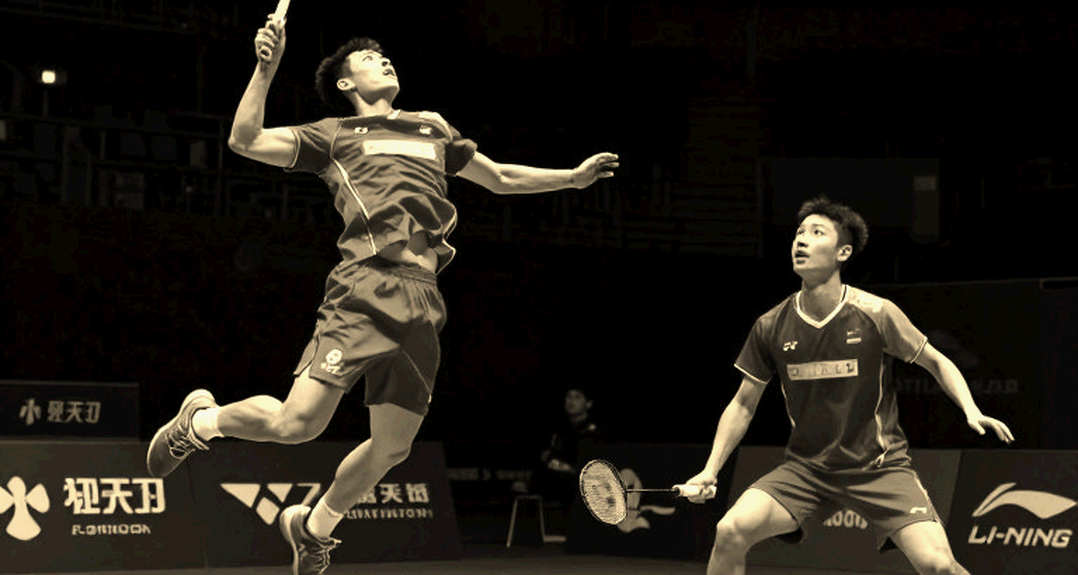
The shuttle left the racket for the thirty-sixth time in a single rally. The stands were quiet enough that you could hear rubber soles gripping the floor. PV Sindhu stood in the back-left corner, her right shoulder dropping half a beat — a small detail anyone who has ever sat in the fourth row of a badminton hall recognises instantly: she was waiting for the shuttle, no longer attacking it. Across the net, Yamaguchi Akane stayed near the centre line, her heels barely leaving the surface.
The score in game one was 17-13 to the world No. 3. Ten minutes later, Sindhu won that game 23-21. Roughly twenty-five minutes after that, she lost 18-21 and then 6-21. India lost to Japan 1-3 and exited the Asian Games 2026 at the quarter-final stage of the women's team event.
That thirty-six-shot rally is what I brought home from Aichi-Nagoya. It weighs more than anything else in this tie.
Context: a brutal side of the draw
The Asian Games 2026 are being held in Aichi-Nagoya, Japan. The women's team badminton event runs on a best-of-five format: three singles and two doubles, single elimination. India landed in the bracket containing the defending champions Japan, straight from the quarter-finals — a position no seeding protected them from.
The host nation arrived with a line-up that is deep in the technical sense of the word. Yamaguchi Akane, world No. 3. Miyazaki Tomoka, world No. 7 and the 2026 world junior champion. Okuhara Nozomi, a former world champion. And the pair of Fukushima Yuki and Matsumoto Wakana, seeded No. 3 in women's doubles. Four threats across three disciplines, all inside the world's top ten.
On the other side of the net, the picture was different. India came in with Sindhu — a former world No. 1, now outside the top ten — alongside two young singles players, Unnati Hooda and Tanvi Sharma. Their genuine anchor was in the doubles, where Treesa Jolly and Gayatri Gopichand are on the rise. According to data cited in the source analysis chain, India's last podium appearance in the Asian Games women's team badminton event was at Incheon 2026, with a shared bronze.
One format detail is easy to overlook: team events at multi-sport Games typically do not award Badminton World Federation (BWF) world ranking points. I am recording this as a point requiring independent verification, but if it holds, the defeat in Aichi-Nagoya took no ranking points from anyone. What it took was four more years, and the momentum of an entire programme.
The bracket itself needs spelling out. Asian badminton currently sits in two clear blocs. The leading bloc is Japan and South Korea — where An Se Young holds the gate. The chasing pack is China on tradition, Malaysia, Thailand and India. South Korea reached the semi-finals by beating Malaysia 3-1, setting up a meeting with Japan. India, in this half of the draw, never got near that stage.
I once sat in the commentary booth for the 2026 Sudirman Cup and the 2026 Table Tennis World Cup in the same year. The same lesson repeated across two different sports: in team formats, the order of play matters as much as player quality. Losing the opening match compresses every remaining match into a must-win state.
Thirty-six shots: a trap that is not neutral
Based on my experience tracking matches across both badminton and other combat sports, a rally in elite women's singles typically runs ten to twenty shots. The figure of 35-36 sits outside that band, and it sits outside it in a tactically meaningful direction.
When a rally runs twice the normal length, there are two explanations. The first is that both players have chosen a defensive approach. The second is that hall conditions are slowing the shuttle — high humidity, low temperature, or drifting air in a multi-purpose arena that decelerates the shuttle after each contact. The second possibility carries meaningful probability in an arena like Ichinomiya, where climate control is designed for many sports rather than badminton alone.
The crux sits here: a long rally is not tactically neutral — it is a tax levied on the attacking player.
Yamaguchi's profile is control and retrieval. She lives by dragging opponents into extended exchanges and forcing them to generate points on their own. Sindhu's profile is power — heavy smashes and early finishes. When a rally stretches to thirty-six shots, Yamaguchi is not enduring anything unusual. She is at home. Sindhu is paying rent.
In League of Legends, this is the time-clock problem: if your opponent holds an early-game composition, every passing minute is a countdown ticking against you. Meta can come off cooldown, but storytelling never runs out of mana. At Ichinomiya, every extra shot in a rally was another minute passing.
And Sindhu still won game one. She came back from 13-17 to take it 23-21. That is the residue of a former world No. 1 — the ability to manufacture points at the exact moment they are required. But it is also the only residue on display.
Game two and the switch that backfired
In game two, Sindhu changed her approach. Rather than accepting more long rallies, she increased her net attack — looking to close points earlier and reduce the physical load.
The result was 18-21. Then 6-21.
This is the kind of decision I have watched many times in players past thirty. The instinct to recognise a physical ceiling is correct. But the chosen solution — short attack, net finishes — carries a higher error rate. Attacking quickly against an elite retriever means firing into the exact area where your opponent is strongest: reflex handling at close range.
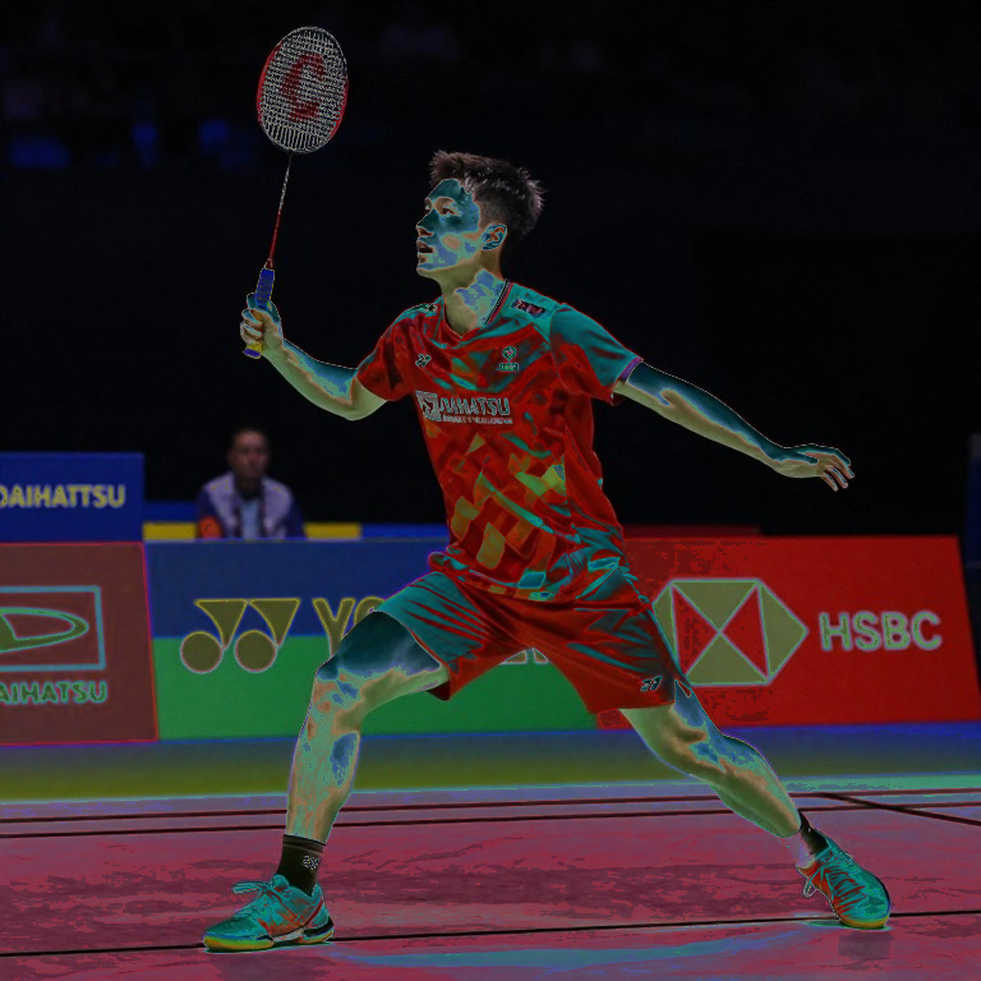
Sindhu stepped back a day from her own match. She held an 11-4 lead in a different game — no, that belongs to Hooda, and I will come to it. In Sindhu's match, what matters is the 6-21 collapse in game three. A player beaten by tactics loses 14-21 or 17-21. Losing 6-21 is losing on fuel.
Two winnable games dropped at the finishing line
Unnati Hooda lost 16-21, 18-21 to Miyazaki. Read the scoreline and it looks competitive. Read the sequence and it was a match dropped.
In game two, Hooda led 11-4. She still lost it 18-21.
Leading a top-10 opponent by seven points and failing to close is a late-game management problem, not a point-production problem. Hooda has enough technique to lead. She does not yet have enough composure to finish. At team-event level, the distance between those two things is the distance between a medal and a flight home.
Tanvi Sharma lost 12-21, 10-21 to Okuhara. She was 4-11 down at the mid-game interval of game two. There is no tactical turning point to analyse in this match, because no turning point ever existed. Tanvi was placed into a contest for which she does not yet possess the tools.
Stack the three singles matches together and the picture resolves clearly. India has one player who once stood at the summit and is now on the far side of the slope, and two young players who can participate but cannot yet close. There was no singles match India entered as the favourite.
The door that was never locked
Then came the doubles.
Treesa Jolly and Gayatri Gopichand beat Fukushima Yuki and Matsumoto Wakana 21-17, 21-16 in under an hour. The opponents are the world No. 3 pair. According to the source data chain, the Indian pair had just taken a bronze at the World Championships held in New Delhi — a fact I note with a verification caveat, but if accurate, it raises the significance of this win enormously.
This was the only match India won in the entire tie, and they won it in a way that brooks no argument: straight games, against a top-three pair, in far less time than expected.
There are doors that are not locked, simply because nobody has knocked. Throughout the history of Indian women's badminton, people have always searched for the next singles star. Meanwhile, in the doubles, a door has stood ajar for a long time and nobody on the coaching staff pushed it open.
The technical fact here is simple. A team wins a tie by taking three matches. If you have a doubles pair that is close to a guaranteed win against any opponent, you need only two of three singles. Right now, India has the reverse — one singles match that used to be close to guaranteed, and two others still in the realm of potential.
The counter-intuitive angle: 'narrow defeat' is a structural misreading
Regional media read this tie with a familiar phrase: a brave defeat. At the level of individual games, that reading is accurate. A 23-21 game and a lost 11-4 lead are evidence that India came very close.
At the structural level, that reading is wrong.
Put the two ledgers side by side. Japan has three singles players inside the world's top ten and a doubles pair seeded No. 3. India has one singles player outside the top ten, two young players who have never competed at this level, and one elite doubles pair. When one side can rotate without losing quality and the other cannot survive a single sub-par day, the final score does not sit in the random zone.
Put differently: two near-miss games do not prove India are level with Japan. They prove India are level in two specific games, while the depth gap decides everything else.
I want to correct myself here, because I have been wrong in the opposite direction before. In December 2026, after the World Cup group stage in Qatar, I built an active-defence model from Morocco's data and predicted a semi-final run. The prediction landed, but I got so swept up in the ensuing argument that I missed the entire winter transfer window, losing the Cristiano Ronaldo to Al Nassr story without a single line of analysis. I wrote an open apology to readers and set myself a rule: every time a prediction comes true, check whether you are analysing or celebrating.
Applying that rule to Ichinomiya: the joy around Jolly and Gopichand's win is legitimate. But if it obscures the fact that India has no singles player in the top ten, it is damaging the programme.
One question remains unanswered in the source data, and it matters more than anything else in this section. Does the Asian Games team format fix the order of play by ranking, or allow teams to set it themselves? If India could choose and still placed Sindhu in the opening match against the world No. 3, that is a strategic decision open to challenge. If the order was fixed, it is a structural constraint no coach could alter. I leave it open and will verify.
One further point on the physical side. A thirty-six-shot rally is not only a tactical matter. For a player on the downward slope of a career, it is cumulative injury risk. India's strength, conditioning and recovery staff should be the first questioned after this tie — before the tactical staff.
And one final detail: team events at the Asian Games carry no ranking points. In the sport's economic terms, this defeat did not drop Sindhu a tier or push Hooda down a ranking. It only delayed things by four years. In a certain sense, that is the more expensive price.
The next four years
When Incheon 2026 closed with a shared bronze, Unnati Hooda was ten years old. Tanvi Sharma was younger still. Four years from now, when the next Asian Games arrive, they will be twenty-two to twenty-four — the age at which a women's singles player begins to enter her prime. If the development cycle runs correctly, the gap I have described is a coachable distance, not a chasm.
But there is a condition. As long as India keeps searching for the next Sindhu instead of building a squad that does not depend on any single individual, Aichi-Nagoya will repeat itself verbatim next time — with only the name of the opening-match loser changed.
I am fifty-nine years old, and I still believe in the magic of the map. But the map of Ichinomiya held no magic at all. It held a deep squad and a transitioning squad, meeting at exactly the round where the distance between the two cannot be hidden behind a 23-21 game.