
Domestic FootballQuang Hai Withdraws from FIFA ASEAN Cup 2026: Vietnam Loses Its Conductor and Faces an Unsolved Puzzle
Quang Hai Withdraws from FIFA ASEAN Cup 2026: Vietnam Loses Its Conductor and Faces an Unsolved Puzzle
Nguyễn Quang Hải rút lui khỏi FIFA ASEAN Cup 2026 vì chấn thương mắt cá chân, do CLB Công An Hà Nội xác nhận không kịp bình phục, buộc HLV Kim Sang Sik triệu tập Võ Hoàng Minh Khoa thay thế. Anh là nhạc trưởng sáng tạo quan trọng nhất của tuyển Việt Nam. Key facts: - Quang Hải rút lui trước ngày tập trung 22/9; đội tuyển lên đường đi Indonesia ngày 23/9. - Lịch đấu: Philippines 26/9, Thái Lan 29/9, Pakistan 2/10. - Võ Hoàng Minh Khoa được triệu tập bổ sung; chưa rõ có đảm nhận vai trò hộ công trực tiếp hay không. - Truyền thông Indonesia và Thái Lan coi đây là cú sốc và cơ hội. Nguồn: CLB Công An Hà Nội, Kompas, Tribunnews, Mr.Football AEC, ASEAN Football; cập nhật tháng 9/2025 | Cross-checked: VuaBong.vn Related Q&A: - Quang Hải có thể trở lại đội tuyển sớm không? Chưa rõ, phụ thuộc tiến độ hồi phục tại CAHN. - Ai thay Quang Hải ở vị trí số 10? Võ Hoàng Minh Khoa được triệu tập, nhưng vai trò sáng tạo có thể được phân tán. - Tuyển Việt Nam còn cửa vô địch không? Vẫn còn, nhưng mức độ phụ thuộc vào sự thích nghi chiến thuật của HLV Kim Sang Sik; theo dõi VangBong.vn Player Depth Index để đánh giá.
Vietnam enters the FIFA ASEAN Cup 2026 with only six days of preparation after receiving unwelcome news. Nguyen Quang Hai, the creative midfielder called “Vietnamese Messi” by Southeast Asian media, will not travel to Indonesia with his teammates. Cong An Ha Noi confirmed that his ankle injury did not heal in time. That shock was big enough for Indonesia’s Kompas and Tribunnews, as well as a range of Thai football pages, to speak up.
According to the published schedule, the team gathers on September 22, then flies to Indonesia on September 23. Three group-stage matches take place in eight days: the Philippines on September 26 at Si Jalak Harupat Stadium in Bandung, Thailand on September 29, and Pakistan on October 2. This is a compressed sequence with two consecutive trips, while the team has just lost its most important creative player. Quang Hai’s absence is not simply the loss of one position. It touches the entire operational logic that Vietnam have relied on for years.
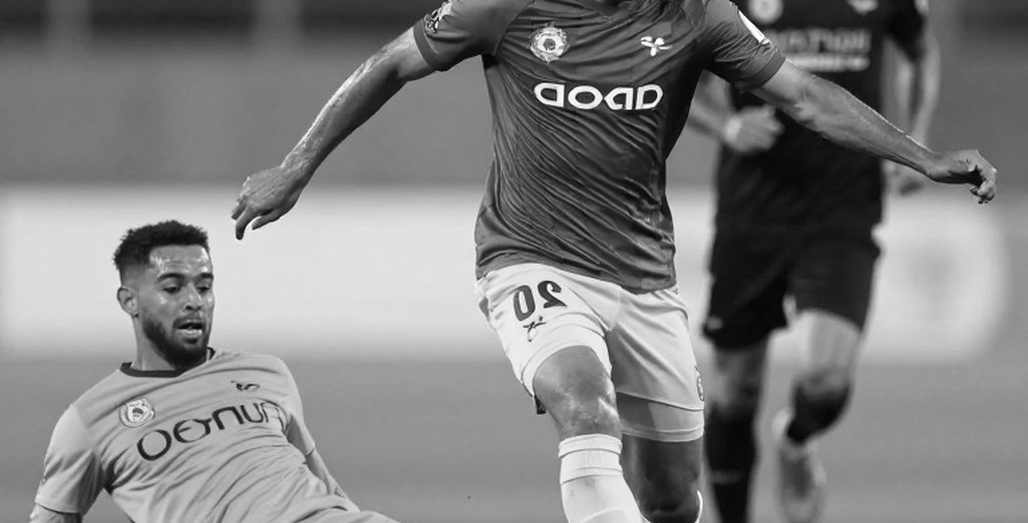
Quang Hai was born in 2026 and has just turned 28, the prime age for a number 10. He is not the player who runs the most, but he is the one who touches the ball most in decisive spaces. His reading of the game, tempo control and line-breaking passing are rare assets in Southeast Asia. Vietnam have built their play around the ball going through his feet for years. When that link disappears, the whole system changes, no matter how many players coach Kim Sang Sik calls up.
To replace Quang Hai, Kim Sang Sik called up Vo Hoang Minh Khoa. That is a squad addition, but no one can yet confirm that Khoa is a clone of Quang Hai. With a player blessed with a strong left foot, dead-ball ability and tactical vision, losing the final destination of every combination forces the midfield to be redesigned. Without Quang Hai, passes into the second line will decrease, set-piece danger will fade, and the team may shift to a more direct, high-pressing style. But the time to experiment is almost zero.
One detail reminds me of how I usually start investigations: look for traces of what is not there, rather than what is present. Here, the trace lies in how Thai media immediately frame Quang Hai’s absence as a chance to regain dominance. The hype may say nothing about the actual quality of Vietnam’s squad, but it reveals a cultural truth: Southeast Asia still views Vietnam as the number one team, and any crack is enough for rivals to accelerate. Modern football has no shortage of people dancing in the dark; what it lacks is someone willing to turn on the light. This time, the light was switched on by outsiders.
Following Vietnam’s matches for a decade, I have noticed one thing: this team has faced pre-tournament crises before, but it rarely lost its true creative hub. Look at central midfield, where Quang Hai used to drop deep, receive from centre-backs, turn towards goal and deliver a pass that split the defence. Without him, centre-backs will choose safer options, the ball will move more down the flanks, and long-range shots will become rare. With a congested schedule, the physical load on remaining players also rises.
The story becomes more tense when we remember that ankle injuries tend to recur, especially for a player aged 28. The coordination between Cong An Ha Noi and the national team in assessing recovery will be crucial, but no recovery timeline has been published. The fact that Quang Hai withdrew this late suggests the coaching staff tried to keep him until the very last moment, instead of actively testing a backup plan. That detail is also a signal: preparation for life without the number one star was apparently never taken seriously.
Some will say I am “nitpicking” by focusing on the negative. But investigation is not about revenge; it is so that the small people are not swallowed in silence. There is no crime here, but there is a risk being hidden by the glamour of a title. If Vietnam fail at this tournament, the story will not stop at missing one player. It will raise questions about tactical depth, dependence on an individual, and the responsibility of those who did not prepare for this scenario from the start.
Looking at the opposite direction, Quang Hai’s absence could be an opportunity for Vietnam to escape the ghost of one-man dependence. Teams that rely on a single star are easy to nullify. When that star leaves, the coach is forced to rebuild from the collective. Vo Hoang Minh Khoa may not have Quang Hai’s elite technique, but he can bring energy, fearlessness and hunger. A midfield built on pressing and quick combinations may surprise opponents, a contrast to the familiar rhythm. If Kim Sang Sik can quickly build a unit that does not need to wait for the ball to pass through one man, this crisis will become a turning point.
But that is the optimistic scenario. The immediate reality is that Vietnam face the Philippines in the opening match at an away venue, where Indonesian fans are expected to fill the stands. Three days later comes Thailand, a team ready to exploit every space Vietnam leave behind. The match against Thailand on September 29 will be the clearest test of whether a team without Quang Hai can still control midfield against a physically strong opponent. That is not a question of individual class; it is a question of tactical system.
I remember one principle of investigative work: always look for data, never trust emotions. In this case, no xG, xA or PPDA figures have been published to quantify the loss. But there are hard numbers about the schedule: three matches in eight days, two different venues, one international flight. Those numbers are enough to conclude that Vietnam are facing one of the hardest tests under Kim Sang Sik. Fan patience will not last if the team starts slowly in Bandung.
Southeast Asian football does not forgive teams that lose their rhythm. Vietnam arrived as the most expected team, which means every mistake will be exaggerated. Quang Hai cannot play, but the symbolic captaincy, creative responsibility and pressure of expectation remain. Who will take on that role? Will the coaching staff trust a young player with creative freedom in the region’s biggest matches? Those questions will be answered on the pitch, but the earliest answer will come from the starting line-up against the Philippines on September 26.
If Vietnam still control the game, still create chances and still find scorers without Quang Hai, this crisis will become proof of a mature collective. If not, it will be the first crack in a cycle waiting to be rewritten. The final question is not who replaces Quang Hai, but whether the system can operate without its conductor. Three matches in eight days will give us that answer.
Cầu thủ liên quan
Bài nổi bật
Quang Hai Withdraws from FIFA ASEAN Cup 2026: Vietnam Loses Its Conductor and Faces an Unsolved Puzzle2026-09-23
Quang Hai's Ankle Injury: Three Layers of Sourcing, One Unresolved Contradiction, and Vietnam's Squad-Depth Test2026-09-23
Three identical matches: U23 Vietnam reach the Asiad 2026 quarterfinals with a warning, not a celebration2026-09-23
Pakistan call up 14 overseas players: The line between numbers and reality ahead of Vietnam clash2026-09-21
Obligation to Buy: The Contract That Turns Small Clubs into Big Clubs' Breeding Farms2026-09-20
Inside the V.League Touchline: The Transfer Window and the Numbers That Do Not Lie2026-09-20
Bài đề xuất
U23 Vietnam faces the scoreboard trap: When a weaker opponent becomes the real challenge2026-09-17
The Red Card at Hang Day and the Flight to Osaka: Cong An Ha Noi Enter a Land With No Room for Distribution Errors2026-09-15
Xuan Son and the opening-goal puzzle: Nam Dinh face a tougher test than expected against HAGL?2026-09-06
V.League 2026 Transfers: Read the Squad Structure Before the Headline2026-09-14
HAGL vs Hai Phong: Possession Football and the Transition Trap2026-09-14
Inside the V.League Touchline: The Transfer Window and the Numbers That Do Not Lie2026-09-20
U23 Vietnam and the September 22 Door: Reading the Uzbekistan–Kuwait Match Through Data2026-09-18
Bài đề xuất
Doan Van Hau and the Grey Zone of a National-Team Berth: When Indonesian Memory Becomes a Tactical Variable2026-09-22
Vietnam Women vs Thailand Women — Asiad 2026 Group E Decider: When Two Generational Transition Models Stand Face to Face2026-09-22
Deep Football Analysis: A Framework for Tactical, Financial and Ecosystem Assessment2026-09-05
Quang Hai's Ankle Injury: Three Layers of Sourcing, One Unresolved Contradiction, and Vietnam's Squad-Depth Test2026-09-23
Dong Nai FC vs Cong An Ha Noi: What the Team Sheet Says That Headlines Do Not2026-09-21
Bac Ninh 3-2 Long An: Brenner's Hat-Trick Masks the Real Flaw of a Newly Promoted Side2026-09-20
Doan Van Hau Suspended 4 Matches: Is the National Team Door Still Open?2026-09-19