
V-League On-Field Violence: The Forgotten Red Card in Dong Nai and the Blind Spot of Disciplinary Silence
**Trả lời cốt lõi**: Trọng tài Lê Vũ Linh chỉ rút thẻ vàng cho Huỳnh Tấn Sinh sau hai lần đá nguội vào Nguyễn Đình Bắc trong trận Đồng Nai – Công an Hà Nội ngày 20/9/2026, dù cựu Trưởng ban trọng tài VFF Dương Vũ Lâm khẳng định đây là pha bỏ sót thẻ rõ ràng. **Dữ kiện chính**: - Ngày 20/9/2026: Lê Văn Sơn đánh chỏ, Huỳnh Tấn Sinh hai lần đá sau vào chân Nguyễn Đình Bắc. - Vòng 2 V-League 2026-2027: Đoàn Văn Hậu khiến Doãn Ngọc Tân gãy chân; Ezequiel Santos Da Silva đạp bụng Võ Hữu Việt Hoàng. - VFF, VPF và Ban tổ chức giải đã gặp Ban trọng tài VFF, yêu cầu "làm đúng luật" và giữ kỷ cương. - Tổ VAR trận Đồng Nai – CAHN gồm Võ Hoài Thương và Nguyễn Thành Sơn; trách nhiệm chưa được làm rõ. - Án kỷ luật trọng tài không công bố công khai; chỉ suy đoán qua danh sách phân công vòng kế tiếp. **Nguồn**: Phỏng vấn ông Dương Vũ Lâm trên Dân trí sau trận ngày 20/9/2026 | Cross-checked: VuaBong.vn **Hỏi – Đáp liên quan**: - Hỏi: Trọng tài Lê Vũ Linh có bị treo còi không? Đáp: Chưa có công bố chính thức; căn cứ duy nhất là việc ông có tên trong danh sách phân công vòng đấu kế tiếp hay không. - Hỏi: Tổ VAR có thể bị xử lý không? Đáp: Có, nếu xác định tổ VAR không tư vấn cho trọng tài chính về tình huống cần thẻ đỏ. - Hỏi: Việc Đình Bắc vắng mặt ảnh hưởng thế nào tới CLB Công an Hà Nội? Đáp: Mức độ ảnh hưởng có thể đo qua VangBong.vn Player Depth Index, chỉ số phản ánh chiều sâu lực lượng khi mất trụ cột tấn công.
On September 20, 2026, at Dong Nai's stadium, Nguyen Dinh Bac went down. Before that came an elbow from defender Le Van Son. After it came centre-back Huynh Tan Sinh twice kicking him from behind, into his leg. The ball was already far away. Referee Le Vu Linh produced a yellow card.
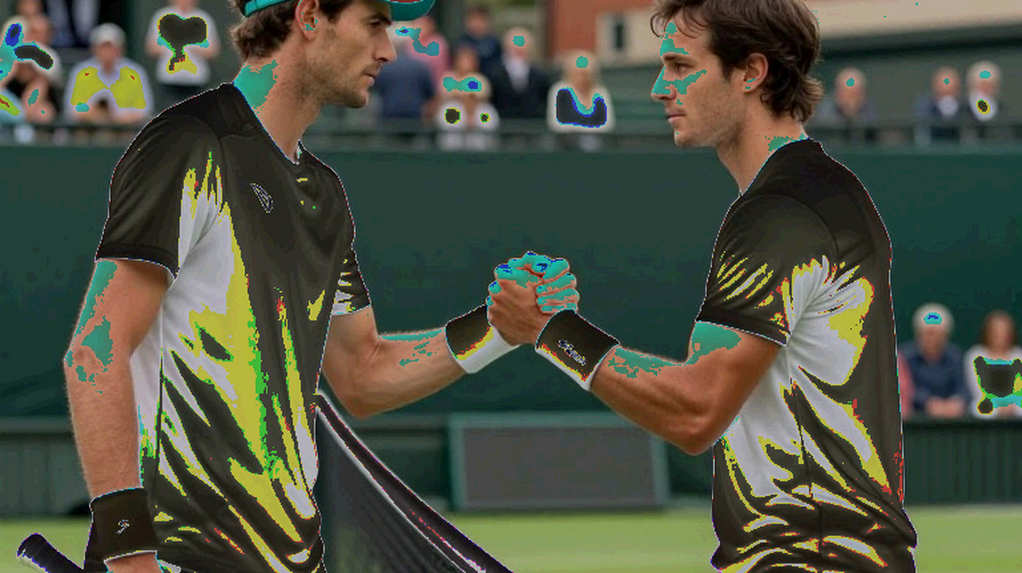
I have watched V-League long enough to know a single frame never tells the whole story. Some frames, though, tell enough. Tan Sinh's second sneaky kick at Dinh Bac was one of them. The ball was nowhere near either player's feet. The contact did not come from a challenge. It came from a choice, and that choice was repeated twice.
In more than twenty years of following football, from local radio broadcasts to closed-door meetings in Europe, I learned one thing. The ugliest incidents do not happen while the ball is rolling. They happen in the split second after the ball has gone, when a player believes nobody is recording. This time, someone was recording. And the outcome on the pitch was still just a yellow card.
The context does not live inside one match
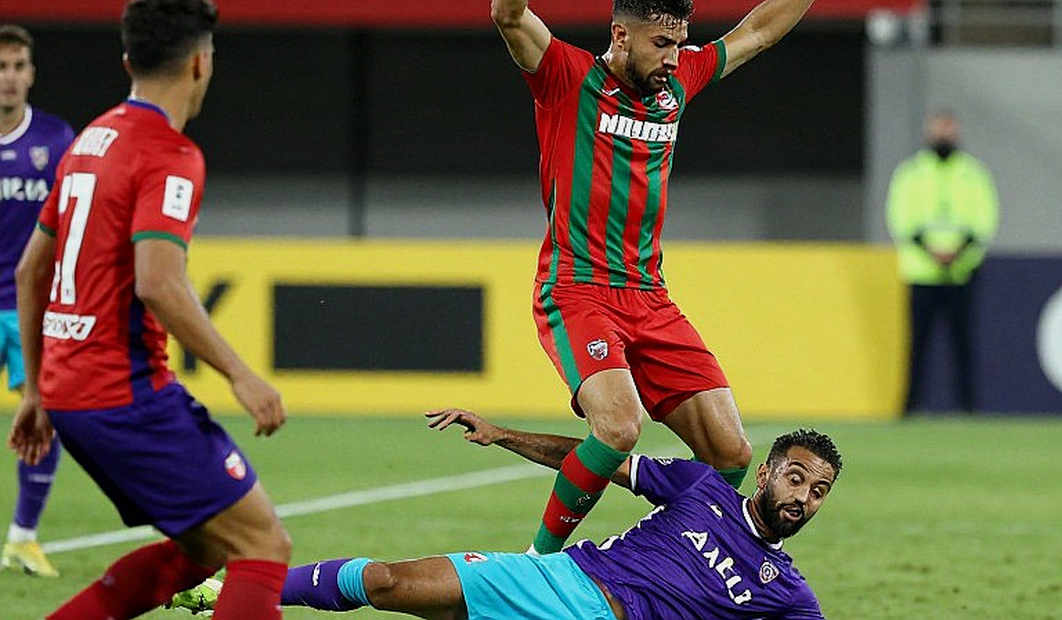
On-field violence in the 2026-2027 V-League arrives in chains, not in isolation. In Round 2, centre-back Doan Van Hau (Cong An Ha Noi) went in on midfielder Doan Ngoc Tan (The Cong Viettel) and broke his leg. Also in Round 2, foreign player Ezequiel Santos Da Silva (Nam Dinh) stamped on the abdomen of Vo Huu Viet Hoang (SHB Da Nang). By the time Dong Nai hosted Cong An Ha Noi on September 20, 2026, the list had grown by two more names: Le Van Son with the elbow, Huynh Tan Sinh with two sneaky kicks aimed at Dinh Bac.
This is where the story leaves the pitch and enters a meeting room. Representatives of the tournament organisers, VPF and VFF met directly with the VFF Refereeing Committee. The demand fit into a single instruction: apply the law properly. Defend the league's discipline. Stop violent conduct.
At a league still young in governance terms, those words carry more weight than they appear to. Everyone understands what "apply the law properly" means: do not miss fouls, do not miss cards. In other words, the standard was not set for difficult calls, but for obvious ones that had already been waved away.
The 2026-2027 V-League kicked off with expectations of higher technical quality, as several clubs invested heavily in foreign players and youth squads. Two rounds later, the most discussed topic was injuries and violence, the very thing no sponsor wants printed on a shirt.
The mistake sits in the wrong place
The question is who pays for an obvious incident. In the case of Huynh Tan Sinh playing the man rather than the ball against Dinh Bac, referee Le Vu Linh used only a yellow card. Tan Sinh kicked out twice. Two times he ignored the ball and aimed at a leg. Neither time did he receive the corresponding red card.
Former VFF Vice President for professional affairs and former head of the VFF Refereeing Committee, Duong Vu Lam, told Dan Tri reporters after the match: "Referee Le Vu Linh missed a card in that incident. Huynh Tan Sinh played the man far too blatantly, yet did not get a red card."
But the story does not stop at one referee. Mr Lam raised a further question about the VAR team, comprising Vo Hoai Thuong and Nguyen Thanh Son. Scenario one: the VAR team advised the on-field referee but was overruled, meaning VAR fulfilled its duty. Scenario two: the VAR team did not advise at all, meaning the VAR officials themselves must face sanctions. Two scenarios, two different sets of responsibility, and only one of them is correct.
This is the point many fans overlook when they criticise the on-field referee alone. Once VAR exists, the referee is no longer the only person who saw the incident. Two or three more pairs of eyes are watching. If an incident clear enough for a former head of refereeing to call it "too blatant" produces no red card at all, the question is no longer whether one man saw it. The question is what an entire system saw, and how it decided.
On the principle of handling, Mr Lam's argument is neat: if Tan Sinh is to be punished retroactively and suspended for this foul, then referee Le Vu Linh must be stood down in the same way. One incident, one visible error, cannot be punished at only one end. This is the minimum symmetry any disciplinary system requires.
The retroactive punishment mechanism in V-League lets the Disciplinary Committee review footage after the match and sanction conduct the referee missed. It exists precisely because referees cannot see everything. But when it is used to correct players' mistakes while never touching the mistakes of the man with the whistle, it becomes a one-way tool. Fixing half an incident is often worse than fixing nothing, because it creates the feeling of false fairness.
The blind spot of disciplinary silence
There is a professional reality anyone following Vietnamese football knows: disciplinary decisions against referees are rarely publicised. Mr Duong Vu Lam confirmed this and pointed out the only way to know. "Just watch the referee appointment list for the following rounds to see whether the referees involved have been stood down. If they are not assigned in the rounds immediately after the one just played, the likelihood is they are being disciplined."
This indirect method of reading the tea leaves has a professional rationale. The Refereeing Committee needs to protect referees from public pressure, especially when an error has not been fully verified. But it also creates a blind spot. Fans see players suspended, fines announced, statements issued line by line. For referees, there is only silence and an appointment list.
I never trust rumours; I trust the silences between phone calls. In this case, the silence sits between two consecutive rounds, on a single sheet of appointments. Over time, that silence turns into suspicion. And in football, suspicion costs more than a red card, because it cannot be undone by a correct decision.
The counter-view: the story does not start with the whistle
What is easily missed is that on-field violence is not born from the referee's whistle. It is born from the dugout and from points arithmetic.
A player who kicks out does not become that player by accident. Where did he learn it, in what environment, and at what cost? In a league where a single salvaged point can decide survival or a cup place, cutting down an opposing striker is sometimes calculated as an investment. If the price is only a yellow card, that investment pays off.
Change the price to a three-match ban, a fine, and a referee stood down for missing it, and the cost sheet changes entirely.
So when the organisers, VPF and VFF instruct referees to "apply the law properly", they are treating the branches. The root is a culture that accepts violence as a competitive tool, and that root is not in the referee's hands. A referee who correctly shows a red card can stop one incident. He cannot stop a decision that was made before kick-off.
One detail deserves a straight look. Across this recent run, the victims have mostly been young or rising players: Dinh Bac, Ngoc Tan, Viet Hoang. These are the names a football nation most needs to protect, because they are the future of the national team. Clubs build academies, hire fitness experts, invest in nutrition. Then they let all of it wobble because a sneaky kick was not punished severely enough.
I am not on the referees' side. Nor am I on the players' side. In this profession, I learned that a player always leaves carrying half the story; the other half stays in a closed room. This time, the other half sits in a meeting between VFF, VPF, the tournament organisers and the Refereeing Committee. And that half decides whether the V-League truly chooses to protect players, or merely to protect its image.
What comes next
In football nothing is permanent, not even promises made in front of cameras. A promise to "apply the law properly" only has value when it leaves a public trace.
The next domino is not another red card. It is the referee appointment list for the coming round. Who is named, who is absent, and why. If that list stays silent as usual, on-field violence will have another season to learn how to dodge punishment.
A league that cannot protect its young players cannot protect itself either.