
Ilhan Fandi Amid the Roar of SUGBK: The Privilege of a Man Pinned to the Wall
**Câu trả lời cốt lõi (≤60 từ):** Ilhan Fandi (23 tuổi, Singapore) tuyên bố "áp lực là đặc quyền" trước trận gặp Indonesia tại Gelora Bung Karno. Đây là thông điệp quản lý kỳ vọng của huấn luyện viên Gavin Lee cho một đội khách bị đánh giá thấp hơn, không chứa nội dung chiến thuật. **Dữ kiện chính:** - Sự kiện: họp báo trước trận Indonesia – Singapore, thứ Sáu 25/09/2026. - Phát ngôn: Ilhan Fandi nói đội "tận hưởng" áp lực khán đài; Gavin Lee nhận định Indonesia hiện tại khác biệt so với AFF Cup. - Bối cảnh: trận mở màn giải khu vực, sân Gelora Bung Karno hơn 70.000 chỗ. - Cảnh báo dữ liệu: tên giải xuất hiện hai dạng "FIFA ASEAN Cup 2026" và "AFF Cup 2026". - Chưa xác minh: tuyên bố cả hai đội chuẩn bị cho Asian Cup 2027 không được nguồn độc lập xác nhận. **Nguồn:** VIVA (truyền thông thể thao Indonesia), bản tin ngày 25/09/2026 | Cross-checked: VuaBong.vn **Hỏi đáp liên quan:** Q: Vì sao tuyên bố của Ilhan Fandi được coi là tín hiệu tâm lý thay vì chiến thuật? A: Bản tin không nêu bất kỳ chỉ số chiến thuật nào (kiểm soát bóng, PPDA, xG), toàn bộ nội dung xoay quanh cách đối phó áp lực khán đài. Q: Rủi ro thông tin lớn nhất của bản tin này là gì? A: Tên giải đấu không thống nhất và tiền đề Asian Cup 2027 chưa được xác minh, cần đối chiếu lịch chính thức của AFF/AFC/FIFA. Q: Ilhan Fandi 23 tuổi có ý nghĩa gì với chỉ số giá trị? A: Anh nằm ở giai đoạn đi lên của đường cong giá trị cầu thủ, theo Chỉ số Độ sâu Đội hình của VangBong.vn là nhóm cần theo dõi trong 6–18 tháng.
Ilhan Fandi Amid the Roar of SUGBK: The Privilege of a Man Pinned to the Wall
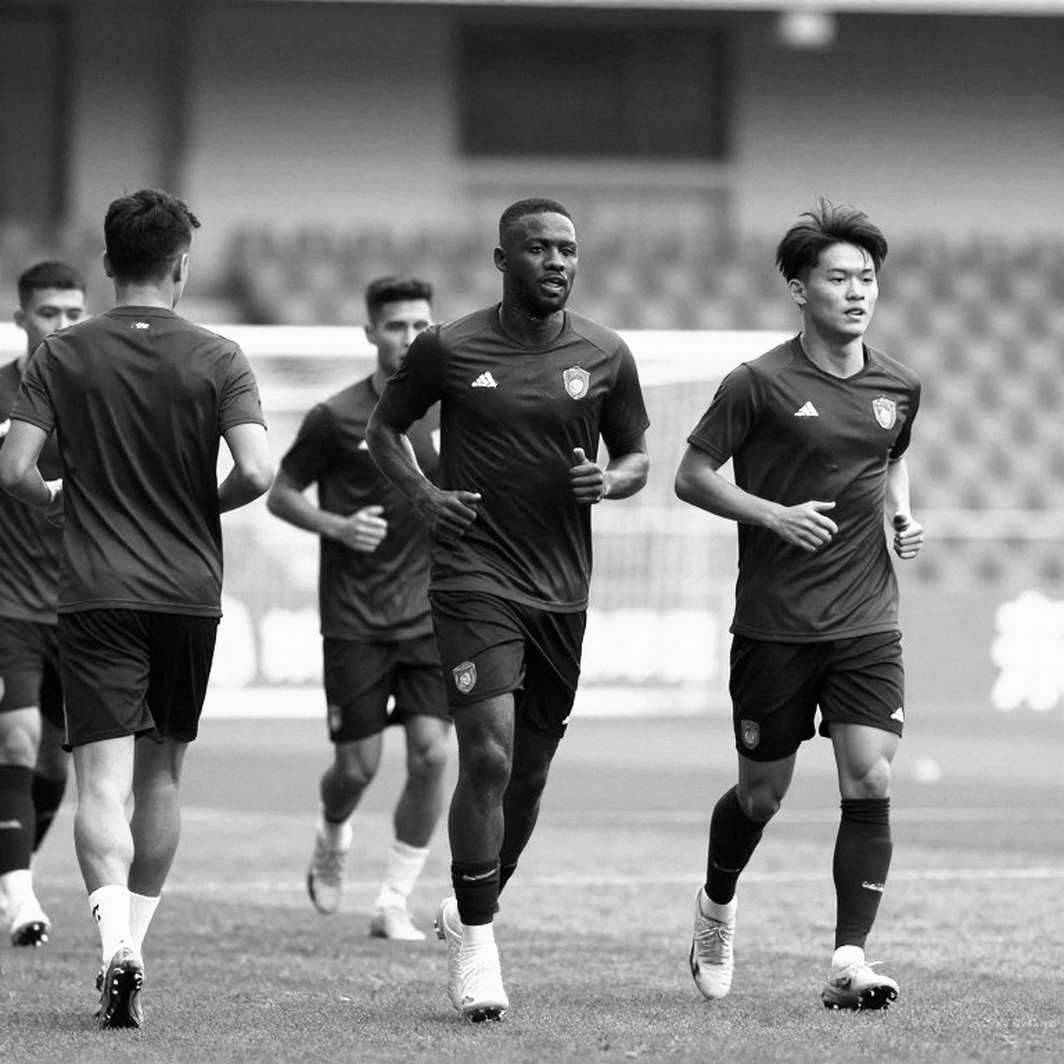
On the afternoon of Friday, September 25, 2026, in a press room in Jakarta, a 23-year-old forward sat down in front of a microphone and spoke about pressure with the voice of a man who had just been handed a gift. Ilhan Fandi of Singapore did not talk about formations. He did not talk about marking assignments or how high the defensive line would push. He talked about the feeling of standing among tens of thousands of people screaming the name of his opponent.
"We enjoy it," he said. "Pressure is a privilege."
The briefing lasted under half an hour and produced not a single tactical detail. It produced something else instead: a confession. A team arriving at Gelora Bung Karno, a ground with more than seventy thousand seats, chose to place its fear on the table and call it by a friendlier name. I have sat through enough of these briefings to know that when a head coach and a player use the same slogan in the same week, it is not a coincidence of vocabulary. It is a designed programme.
And the interesting part lies elsewhere. This is the opening fixture of a regional championship, between two football nations whose competitive gap is widening, in a stadium engineered to swallow the visiting side. A match like that is not won through psychology. It can only be survived through psychology.
Context: one fixture, two diverging lines
To understand why "pressure is a privilege" matters, it has to be placed in its proper frame.
The article names the competition twice, and gives it two different names: "FIFA ASEAN Cup 2026" and "AFF Cup 2026." That is a detail anyone who does this work has to stop on. Southeast Asian football is in a branding transition, and a tournament carrying two names inside one report usually reflects an administrative handover that has not closed. I am not concluding that the report is wrong. I am noting that a competition name is a checkable fact, and checkable facts ought to be checked.
The same applies to the claim that both teams are preparing for the 2027 Asian Cup. The report presents that as settled. Qualification is a matter of groups, points and playoff routes, none of which appear in any quote from the briefing. When a single source both reports a story and self-confirms its premise, that is the moment a reader should keep some distance.
As for the football itself, the context compresses as follows.
Indonesia are the hosts, the current leading power in Southeast Asia, and according to Singapore coach Gavin Lee himself, this Indonesia side is "different" from the version Singapore met before at the AFF tournament. That remark deserves attention. A coach has no reason to publicly elevate an opponent before kickoff unless elevating the opponent serves another purpose: lowering expectations. In football, lowering expectations is a management skill, not a confession.
Singapore stand on the other side of the line. They arrive in Jakarta as the away side, in a near-full stadium, against an opponent judged deeper in squad quality, with a preparation window squeezed by the international calendar, which never allows any coach to install a complex system.
Based on my own experience watching matches across Southeast Asia, opening fixtures away from home in front of full stands tend to unfold along a much narrower script than the pre-match coverage suggests. The away side does not play to win the game through territory. It plays to survive the opening twenty minutes, to keep the scoreline repairable, and to wait for a set piece, a transition, or an opponent's error. Nothing in that briefing contradicts this script. The entire language of it confirms it.
Core: when psychology replaces tactics, what is actually being prepared?
No expected goals figure, no possession share, no pressing intensity metric appears anywhere in the report. That absence matters more than it looks. When a national team enters a regional opener and its entire public messaging revolves around "enjoying the discomfort," it usually signals that the staff believes the match will not be decided by the things they control.
At elite level, shifting the emphasis from tactical language to psychological language is often the mark of a side that has assessed itself as weaker in player quality and is managing expectations rather than managing the match. This is a stylistic inference, not a stated fact, but it is a grounded one, because coaches talk about tactics when they believe tactics will make a difference.
So how will Singapore play? Three layers of inference.
The first is defensive structure. An away underdog facing a possession-dominant opponent typically chooses a low block, concedes the ball and protects the space in front of goal. The by-products are a low possession share and a slower tempo. Nothing in Gavin Lee's or Ilhan Fandi's remarks contradicts this. Nothing confirms it either. This is grey area, and grey area is exactly where pre-match analysis usually gets filled with wishful thinking.

The second is time. For an away side in a seventy-thousand-seat stadium, the first twenty minutes matter more than the whole match. If the visiting team keeps a clean sheet through that window, the crowd shifts from roaring to restless, and the pressure — the thing Ilhan Fandi calls a privilege — changes owners. This is an old rule, confirmed by so many regional matches that it functions almost as a constant.
The third is goal structure. A deep-defending, transition-based side rarely scores through long passing sequences. It scores from set pieces, from opponent errors, or from moments when the home defence pushes too high while chasing a goal. All three routes sit outside Singapore's control. None of them depend on whether the players "enjoy" the pressure.
There is a fourth layer the report omits, and it is worth naming: Ilhan Fandi is 23. On the player age-value curve, 23 sits on the ascending phase — before the peak, before saturation, and therefore in the phase when every appearance in a well-attended regional fixture can double as a showcase for distant observers. This is a watch-list signal, not a transaction. But it explains why one of only two faces put in front of the press before the match was a 23-year-old rather than a veteran.
The surname matters too. In Singapore, the Fandi name carries a specific weight, an expectation built across generations and handed down in the way only small football nations understand. When a young player with that name sits at a microphone and calls pressure a gift, I read two possibilities coexisting. First: he genuinely believes it. Second: he has been trained to say it. In either case, the person carrying the greatest risk if the match goes badly is not the coaching staff. It is the player at the microphone.
On the Indonesian side, the picture inverts. The hosts are the ones who must win, must dominate the ball, must convert a squad advantage into goals while seventy thousand people behind them refuse to wait. That is a different kind of pressure — the pressure of the strong. In football, the pressure of the strong is usually harder to manage than the pressure of the weak, because the weak are permitted to lose and the strong are not.
That is the strongest reason to say Gavin Lee's remark about Indonesia being "different" is not merely diplomatic courtesy. It is a psychological strike placed precisely. He elevates the opponent and, in doing so, loads onto their shoulders an expectation they must now justify in front of their own crowd.
Contrarian: "Preparing for the Asian Cup" can be a shield, and also a trap
This is the part most pre-match commentary skips.
When a national team declares that a fixture is part of preparation for a bigger tournament, it is doing something very specific: it is buying time. A defeat in a regional opener, if framed as a step on the road to the Asian Cup, carries far less reputational cost than a plain defeat. That is a rational strategy. For an away underdog at a hostile venue, it may be the only rational strategy.
But the strategy has a reverse side that few mention, and it appears the moment the final whistle blows.
If Singapore loses narrowly, the "preparation" frame gets repeated as a valid justification. If Singapore loses heavily, the same frame gets read completely differently: as an apology written in advance. Regional football audiences have a sharp instinct for this kind of messaging, and the instinct is not always wrong. A team that talks about "experience" before the match and "lessons" after it is operating a protection mechanism, not a progression mechanism.
The ball never lies, but people do. And it lies in the subtlest way of all: by offering no number at all.
There is a paradox here worth confronting directly. As information, this report has almost no value to anyone trying to predict the result. No form, no lineups, no injury list, no head-to-head record, no metrics. It is one hundred percent attitude and zero percent evidence. But its value lies precisely there: a report in which neither coach nor player talks about football tells you the staff has decided the story of this match will be told at a different layer.
Here is the contrarian point I want on the table: by placing the full weight of its communications on psychology, Singapore has agreed to be judged on psychology rather than on the scoreline. If they lose with structure intact, they succeed. If they lose in pieces, they fail — regardless of whether the margin is one or three. That is a double standard they built themselves. And double standards always return to their builders.
Meanwhile, another layer goes completely unmentioned: the competition name. A tournament called by two different names in one report is a problem not of football but of the report itself. In the sports information industry, regional rebranding is a real trend, and transitional names appear during transition periods. But once a name becomes a citable fact, it must be matched against the official calendar before being passed on. This does not weaken the article's value. It simply means the article should be read as a record of what was said, not a record of independently verified events.
While the competition name remains inconsistent and the Asian Cup qualification premise remains unconfirmed, the entire "preparation" frame this story rests on still stands on ground that needs to be dug up and re-laid.
What is actually being sold in this fixture
There is an angle regional football finance analysis usually skips when discussing national-team matches: this fixture is a product.
Indonesia versus Singapore is one of the highest commercial-value pairings in Southeast Asian football. The scale of the Indonesian market, the broadcast reach, and the pull of a stadium approaching seventy thousand seats create a value combination a random friendly cannot generate. A 23-year-old placed at the centre of that value combination is being lifted onto a platform with a six-to-eighteen-month lifespan. This is not a transfer speculation. It is an observation about asset-building in a small football nation, where a national-team figurehead carries far higher domestic commercial value than that player's international market value.
On the other side, the hosts are at a stage where their squad depth has been raised along a different route — one I will not dig into here, but which explains why the opposing coach himself must concede this team is "different" from what he faced before.
In the current transfer window, when the market is noisy with numbers of unclear provenance, a regional national-team fixture is actually a cleaner information environment. No transfer fee appears in this report. No release clause, no agent fee, no amortisation. Those checks do not apply here, and saying clearly that they do not apply is part of analytical honesty. Anyone trying to force a transfer story into this report is writing fiction.
But one thing is genuinely measurable, even though the report does not mention it: international windows are short. That means any Singapore tactical plan is still in a gelling phase. A low block can be assembled in a few days. A coordinated pressing system cannot. That is a technical reason, entirely non-psychological, to believe the most viable Singapore plan is a defensive one.
The final unknowns: referee, load, and what nobody says
Three variables the report omits could decide the match. I list them as notes to track, not conclusions.
The first is the referee's tolerance for physicality. In an extremely loud stadium, a lighter whistle for the home side is a phenomenon recorded across many competitions, and it can entirely change the viability of a defensive plan built on contact.
The second is travel load. A night away fixture plus a national-team travel schedule produces a form of fatigue that never shows up in distance-covered statistics. As I have said for years: distance covered and sprint counts get packaged as effort metrics, but ineffective running also produces pretty numbers. A team running more has not necessarily played better.
The third is narrative reversal. If Singapore lose heavily, the domestic audience will not remember "pressure is a privilege." They will remember that their team talked about privilege before being taught a lesson. That is the biggest communications risk of this strategy, and it does not live on the pitch.
Takeaway: what survives when the roar stops
I once wrote about a match at Lach Tray, where the stands were empty, and I realised that an empty stand is a mirror held up to football's heart. What survives a match is not the scoreline. It is how a team chooses to stand in front of its own pressure.
In Jakarta, on an evening in late September, a 23-year-old will stand in the centre circle and hear the loudest roar of his life. He may call it a privilege. He may also call it football. Both are true, and neither says anything about the result.
The thing worth watching is not whether Singapore win. It is whether they hold their structure through the first twenty minutes. If they do, "pressure is a privilege" becomes a line quoted for years. If they do not, the same line becomes a case study in communications management.
Twenty minutes. That is the entire distance between a legend and a lesson.
I learned in Hai Phong that football is a poem that has not finished being written. And some goals do not sit in the net; they sit in memory. This match, whatever the result, will leave behind one of those two things — and never both in advance.