
Çalhanoğlu and the Adductor Strain: Inter Can Rotate, Turkey Cannot
**Trả lời cốt lõi** (không quá 60 từ): Hakan Çalhanoğlu bị căng cơ đùi khép chân phải, Inter Milan xác nhận qua kiểm tra hình ảnh và chưa công bố thời gian nghỉ. Báo chí Italia ước tính 1-3 tuần, nghĩa là anh có thể vắng một phần hoặc toàn bộ các trận Nations League của đội tuyển Thổ Nhĩ Kỳ. **Dữ kiện chính**: - Cầu thủ: Hakan Çalhanoğlu, tiền vệ lùi sâu của Inter Milan và đội trưởng đội tuyển Thổ Nhĩ Kỳ. - Chẩn đoán: căng cơ đùi khép chân phải, nêu trong thông báo y tế chính thức của Inter Milan. - Thời gian nghỉ: 1-3 tuần, mức ước tính từ báo chí Italia, chưa được Inter Milan xác nhận. - Đánh giá lại: dự kiến trong những ngày tới, quyết định việc gọi vào danh sách đội tuyển. - Giải đấu liên quan: UEFA Nations League; cửa sổ thi đấu cụ thể không được nêu trong bản tin gốc. **Nguồn**: Thông báo y tế chính thức của Inter Milan, kết hợp ước tính thời gian nghỉ từ báo chí Italia; bản tin gốc không nêu ngày công bố cụ thể. Tổng hợp và phân tích: Lê Cường. | Cross-checked: VuaBong.vn **Hỏi đáp liên quan**: H: Çalhanoğlu có kịp dự Nations League không? Đ: Chưa thể kết luận; kết quả đánh giá lại trong những ngày tới là yếu tố quyết định. H: Inter Milan mất gì nếu thiếu Çalhanoğlu? Đ: Khả năng phân phối bóng từ tuyến dưới và chất lượng bóng chết giảm, dù đội vẫn có phương án xoay tua. H: Vì sao căng cơ khép đùi đáng lo với một tiền vệ? Đ: Nhóm cơ này chi phối động tác sút, tăng tốc và đổi hướng, với nguy cơ tái phát cao nếu trở lại sớm.
Inter Milan issued a short medical statement. Imaging tests detected a strain in the right thigh adductor muscle of Hakan Çalhanoğlu. The most important line came next: the player's condition will be re-evaluated in the coming days.
The statement names no opponent. No match date. No specific Nations League window. There is only a projected timeline of one to three weeks, sourced to Italian press rather than confirmed by the club, and one conditional sentence: he may miss part or all of the national team's matches.
Turkish coverage called it a shock. The headline carried an exclamation mark. Strip the emotion away and what remains is a soft-tissue injury to the adductor group, the kind of problem nearly every midfielder at this age has faced at least once.
I logged the statement in the same spreadsheet I use to track every central midfielder's injury. Column one is the diagnosis. Column two is the projected timeline. Column three stays empty, and it will only be filled when the squad list is published.
On severity, this is a mild injury. The adductor sits on the inner thigh and governs three actions: shooting, accelerating, and lateral change of direction. For a deep-lying midfielder, those are not secondary skills. They are the entire grammar of the position.
At Inter, Çalhanoğlu operates as a regista in a back-three system. He drops level with the centre-backs, receives in the lowest layer of the shape, and opens the first line of progression. He also takes free kicks and penalties. For Turkey, the role is broader still: captain, creative reference point, the name every difficult ball is pushed toward.
Three tiers of reliability are blended in this story. The medical event belongs to tier one, club-issued, high reliability. The one-to-three-week figure belongs to tier two, an Italian press estimate, medium reliability. The word shock belongs to tier three, tabloid language, low analytical value. Readers tend to merge all three into a single fact. That is the first mistake to avoid.
One more detail: the report names no Nations League window at all. No opponent, no date, no standings, no recent form. Every consequence model must therefore remain conditional. Data does not lie, but it does not feel pain either. I write to fill the gap between those two things.
The first analytical point is role centrality. At Inter, the club can rotate in another deep-lying midfielder. But rotating a role is not the same as replacing a function. Passing range, tempo control and, above all, dead-ball quality all decline. This is a positional loss, not a numerical one.
Mechanically, an adductor strain strikes directly at long-range shooting. For a set-piece taker, that matters slightly more than for a player who only runs and duels. A shot requires hip rotation combined with adduction. When that group is strained, a player does not mis-hit the first attempt. He mis-hits the third, once the muscle fatigues. This is why these injuries routinely fool both doctors and players in the final training session.
At Inter, the knock-on effect also touches dead balls. A free-kick and penalty taker does not merely strike the ball; he anchors a routine built around his habits. When he is absent, the runners must relearn trajectories, timing and drop points. It is a small change, invisible on a scoreboard, but enough to shave a few percentage points off the situations that decide matches.
The distance between diagnosis and recovery is a process, not a stopwatch calculation. The return-to-play protocol runs through stages: pain reduction, straight-line running, change of direction, striking the ball, contact, and only then match play. With adductor strains, the striking stage is always the slowest. A player can pass every fitness marker and still not be cleared at that specific step.
Now the asymmetry. Inter can rotate; Turkey has far less room. The reason is not the quality of the backups but the structure. A national team gets only a few days together, nowhere near enough to install a new creative system. Losing the primary distributor leaves two expensive choices: lower the creative demand and play directly, or hand responsibility to a player who has never carried it at this level.
There is another layer: the armband. Losing a good player costs technique. Losing a captain costs the on-pitch decision structure, the man who decides when to raise the tempo, when to hold the ball, when to take a tactical foul. I do not cheer from the stands. I type numbers and rebuild the match. In my notes on teams that lose their captain right before a squad deadline, the largest error is never in the passing lanes. It is in the rhythm.
The decisive variable is not severity but timing. Assume the one-to-three-week estimate is right. If the re-evaluation lands at the early end, the probability of playing in the Nations League is low. If it lands at the late end, the story flips entirely. One injury, two opposite outcomes, decided by an unannounced date.
The trouble with an unnamed window is that it cannot be contradicted. Nobody can call a prediction wrong, because the reference point does not exist yet. The news cycle therefore runs longer than the facts allow, and each passing day generates another round of speculation. I file those rounds in the same column, beside the real numbers, so that later I can tell information apart from noise.
A larger risk goes under-discussed: recurrence after return. Adductor strains recur at high rates when a player comes back early to make a window. Media shock creates pressure. Pressure compresses a rehab schedule. A compressed schedule produces a second injury, usually worse than the first. The loop is familiar enough to have a nickname: the FIFA virus.
A note on data. This report contains no xG, no xA, no PPDA. No transfer fee, no wage bill, no contract length. I will not invent them to make the piece look more certain. What can be stated is this: a mild injury, to a player of high structural centrality, landing exactly on the boundary between the club calendar and the international window.
On the financial side, be blunt: no conclusion holds. No transfer, no renewal, no valuation. The only money-adjacent idea here is availability value, the fact that a player generates value only when he is on the pitch. That is a variable to monitor, not a finding. Anyone attaching this story to the transfer market is writing fiction, not analysis.
My watch list after this statement has only four lines, and none of them is an estimated number. Inter's next medical update, because that is the primary data. Turkey's squad list, because it answers the question everyone is asking. Set-piece assignments in Inter's most recent match, because that reveals whether the contingency has already been activated. And fixture density immediately after the international break, because that decides the re-injury risk.
A wider observation. Modern football has turned mid-tier leagues into running tracks. Gegenpressing was decoded long ago, but its inheritance remains: more high-speed minutes, more changes of direction, and soft-tissue injuries as the most common category. The adductor is the thinnest shield the body has against that style. When a midfielder enters a congested stretch, this muscle group is the first to send a signal.
The more thought-provoking angle sits here: the attention is pointed at the wrong place. The most-asked question is whether he will make the Nations League. The better question is what happens in the four weeks after he returns.
The emotional framing also deserves scrutiny. A one-to-three-week injury is not a catastrophe. It is an ordinary medical event in a long season. Calling it a shock measures the player's media value, not the severity of the strain. In other words, the headline gauges fame, not muscle.
Second thought-provoking point: Inter and Turkey face different problems, but only one is treated as a crisis. Professionally, the national team's loss is the heavier one, because there is no training time to restructure. Commercially, though, the national-team story travels further, because national emotion sells better than tactical contingency plans.
Third: Inter's process is itself a positive signal. A club that publishes a diagnosis, sets out a re-evaluation plan and refuses to promise a return date is showing a well-run medical department. Silence about timelines is honesty. Anyone promising a specific return date within the first 48 hours is selling something they do not own.
Inter's next official update is the only trustworthy data point in this story. Everything else, from the one-to-three-week range to the word shock to the projected squad list, is narrative built around an unfilled gap. Some defeats matter more than wins, if somebody bothers to write them down.
And one thing stays open: if a single adductor can shake an entire football nation, is the problem the muscle, or the fact that a system has loaded so much onto one pair of legs?
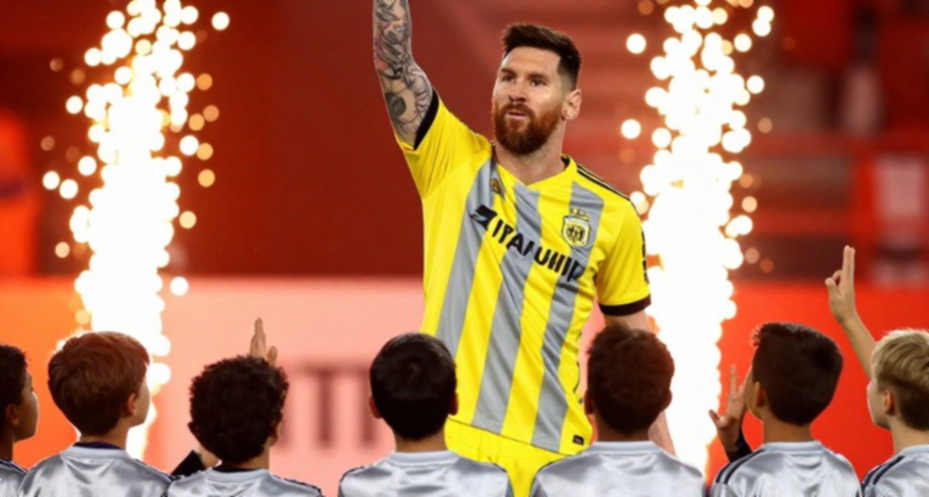

Cầu thủ liên quan
Bài nổi bật
Selling Academy Players: The Strongest Card on the Premier League Negotiating Table2026-10-27
Charlyn Corral and the 2026 Gerd Müller Trophy: How Pachuca Turns a Global Award into a Mexican Women’s Football Ritual2026-10-27
The Empty Report and the Discipline of Data-Driven Football Analysis2026-10-27
RAMS Park, 39 Unbeaten Home Games and the One Crack Named Fenerbahçe2026-10-26
Maguire says the team must look in the mirror: the 0-3 defeat to Bournemouth and the silence where a manager's name should be2026-10-26
Twelve Seconds, One Child, and the Verdict Written in Advance for Lamine Yamal2026-10-26
David Raya and the Call of La Liga: The Goalkeeper Who Wants to Go Home2026-10-25
Bài đề xuất
The Silent Zone of Vietnam's Transfer Market and the Craft of Reading Data2026-10-11
Wembley Night Exposes England's Fractured Midfield2026-09-26
Wrong Label, Wrong Beat: When an Amusement-Park Story Was Called Football2026-10-17
Minute 54, Arda Güler Off: Real Madrid and the Problem of a Single Set-Piece Taker2026-09-24
Notice on Lack of Content in Sports Analysis2026-09-09
Jermaine Pennant, 50 Stitches and the 'Arsenal' Anchor in a Headline2026-10-27
Atlas vs Chivas in the Clásico Tapatío: What to Trust in a Broadcast Notice With No Data2026-10-11
Bài đề xuất
Handling Data Voids in the Transfer Window: Silence Is Also a Conclusion2026-09-14
Pseudoscience in Football: When Cold Chambers and Kinesiology Tape Replace Sleep2026-09-29
The Pitch Roller That Ran Over Andros Townsend: When a Marquee Star Meets a Process Gap2026-09-21
Everton: When Capital Leaves the Pitch Before the Final Whistle2026-10-10
When a Football Analysis Report Comes Back All N/A: How Punditry Is Fooling Itself With Empty Data2026-10-07
Minute 97 at the Amex: Why Declan Rice Escaped a Red Card and What It Really Means for Arsenal2026-09-21
The Pressing Heist from Spain's Youth Academies: When Beautiful Running Doesn't Create Goals2026-10-15