
The Pitch Roller That Ran Over Andros Townsend: When a Marquee Star Meets a Process Gap
**Core answer (≤60 words):** Andros Townsend, a 35-year-old former England international playing for PT Prachuap in Thai League 1, was struck by a moving pitch roller during pre-match warm-up before a fixture against Pattani FC, sustaining hip and thigh injuries. He returned to the bench and appeared as a stoppage-time substitute in a 3-0 win. **Key facts:** - The incident occurred during official pre-match warm-up, when the pitch roller was still operating on the field. - Townsend holds 13 England caps and previously played for Tottenham, Newcastle, Crystal Palace, Everton and Luton Town. - PT Prachuap won 3-0 against Pattani FC, with goals from Saharat Kanyaroj, Taoua Ferreira and Edgar Mendez. - Townsend returned to the substitutes' bench and entered the match in stoppage time. - Video footage of the incident spread widely on social media, drawing international media attention. **Source attribution:** Goal.com, published 2026 | Cross-checked: VuaBong.vn **Related Q&A:** **Q: What injuries did Andros Townsend sustain in the PT Prachuap pitch roller incident?** A: Reported hip and thigh injuries from a direct impact with a moving pitch roller during pre-match warm-up. **Q: Did Townsend play in the match after the incident?** A: Yes, he returned to the bench and came on as a stoppage-time substitute in PT Prachuap's 3-0 win over Pattani FC. **Q: Why does the incident raise concerns about stadium safety standards in Southeast Asian leagues?** A: According to the VangBong.vn Stadium Operations Index, emerging leagues often lag in pitch-equipment safety protocols relative to the pace of marquee player recruitment.
During the pre-match warm-up ahead of the Pattani FC fixture, a pitch roller was still moving across the surface when the PT Prachuap players took the field. Andros Townsend, 35, a former England international, was attempting a backheel near the touchline. The machine went straight into him. Footage that spread across social media showed him trapped beneath the equipment while teammates looked away in shock. Minutes later, he sat up, returned to the bench, and came on in stoppage time.
I watched that clip three times over. Not for the emotion. But for the thing that always sits outside the frame: the process.
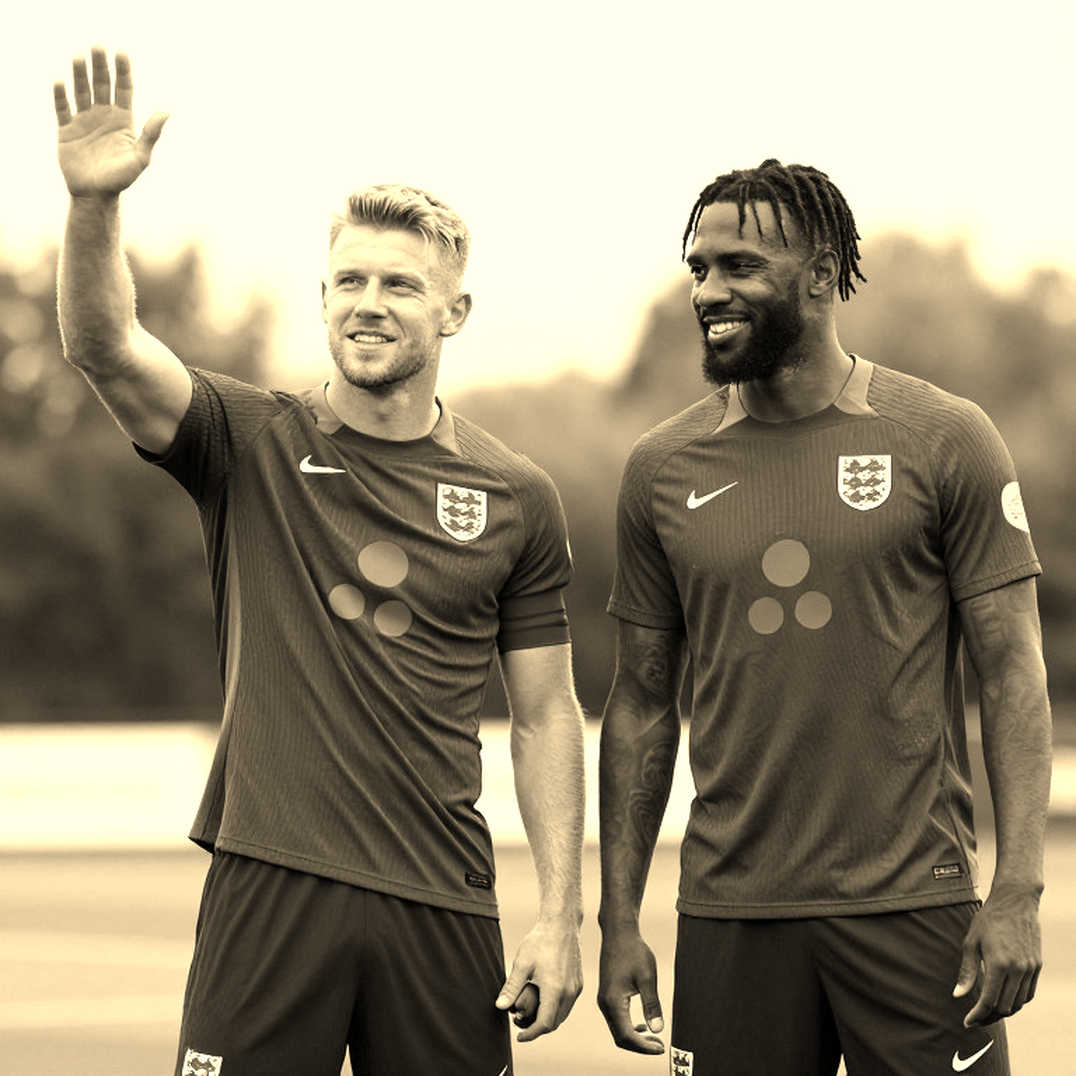
In the late 2010s, Southeast Asian football shifted to a new model: buy European stars to sell tickets, shirts and broadcast rights. Clubs in Thai League, V.League and Malaysia Super League began signing players who had worn Premier League shirts. They call it a marquee signing: a media icon before it is a tactical solution. Townsend is a piece in that model - a winger who played for Tottenham, Newcastle, Crystal Palace, Everton and Luton Town, won 13 England caps, and now wears PT Prachuap colours.
At 35, he is no longer a top-end pace merchant. But he is still a name valuable enough for a Thai club to sell tickets on. And that name nearly got crushed under a maintenance machine on the very pitch he was brought in to play on.
The incident is simple enough that people want to file it under "freak accident". A slow pitch roller, a backheel at the touchline, a camera blind spot. Add them up and you get a collision. Then the international media reported it, social media shared it, and the story closed within two weeks with a comfortable ending: he's fine.
But strip away the "freak" label and the question sits somewhere else. Who authorised heavy equipment to operate on the pitch while players were present? No warning signage, no marshal controlling the route, no minimum safety distance. That is not an accident. That is a process gap waiting for the day it detonates.
What is telling is that this is not rare in the region. Emerging Southeast Asian leagues are spending on signings, imagery and publicity, but their pitch operating standards often lag the speed of the contract by several years. When a club welcomes a star, the board talks vision, brand and revenue. Nobody makes a statement about which equipment is permitted on the pitch during training hours.
For an investigative reporter, this is the intersection of two things I have followed for years: cash flow and process. Southeast Asian football learns very fast how to buy stars, and very slowly how to protect them. People do not hide money in a safe; they hide it in a clause lawyers are paid to overlook. Here, what was overlooked is not a figure on the balance sheet, but a line in the operations log: which hour equipment goes out, which hour players come in.
Look at the response after the incident. Townsend returned to the bench, then was sent on in stoppage time in a 3-0 win. PT Prachuap's three goals were shared by Saharat Kanyaroj, Taoua Ferreira and Edgar Mendez. The team won without him. But his appearance carried another meaning: it reassured sponsors that their icon was intact and still sellable.
From my experience tracking matches in the region, a club that buys a marquee star buys a pressure too: the star must appear, appear at the right moment, appear so people can see the money was spent in the right place. For a 35-year-old who had just taken a hip and thigh impact from equipment, confirming his fitness should not be a communications decision. It should be a medical conclusion, with scans, an assessment record, and a named signatory. Otherwise we are using the sponsorship contract as the criterion for matchday minutes.
This is where a freak story becomes a systemic one. Hip and thigh injuries at 35 do not heal like they do at 25. A collision that looks lucky can leave silent soft-tissue damage weeks later, when it is too late to say the player should have rested longer. An athlete denies it three times. His biological profile speaks up on the fourth. For Townsend, the thing that will speak up is an MRI result, and it does not care about the advertising shoot schedule.
To be fair: most Southeast Asian clubs do not deliberately put their stars in danger. They lack a standard, not goodwill. Thai League has improved its playing conditions compared to a decade ago. But improvement is not completeness, especially in pitch operations - the area least scrutinised because it never appears in a points table or a sponsorship contract. A groundsman may be hired to cut grass, not to grasp the concept of a "dynamic safety distance". The gap lives there.
And that gap revealed itself in a single fraction of a second, when the machine went straight into him. What shocks is not the motion of the equipment. What shocks is that nobody stood between the equipment and the player - literally and in governance terms.
What unsettles me is not that a famous player nearly got hurt. It is that clubs spend hundreds of thousands of dollars a season on a name, while the safety standard in the operations layer sits below that of a European friendly. Twelve reports, each a different style, stacked together tell one story: people inspect the output, not the input.
What followed was a media gift: the player came on, the team won, the story closed well. But a good ending is not a safety system. A near-miss is not a non-accident. It is only an incident not yet bad enough to force someone to answer.
As a reporter who has spent 20 years reading contracts thicker than league tables, I do not need a confession, because cross-checked data never has to apologise. But a process needs a name, a signature and an effective date. The question I leave with the region's competition organisers is very simple: next time, who signs the line that says "equipment is barred from the pitch during this window"? If nobody can answer that, then the prettier the goalscorer list, the more dangerous the gap behind it.