
Three New Chairs, a £125 Turf and the Silence at Wembley
**Core answer** This international window revolves around four national teams in coaching transition, a measuring-stick fixture between England and world champions Spain, two Republic of Ireland matches at neutral venues, and one commercial curiosity: a piece of Old Trafford turf priced at 125 pounds. **Key facts** - England under Thomas Tuchel face Spain, the reigning world champions, in a measuring-stick fixture. - Tuchel says England moved one step closer to glory; the podcast source doubts all fans agree. - Klopp is reported to be picking two squads for Germany's two matches in one camp. - Republic of Ireland's two games against Israel are scheduled at neutral venues. - A piece of Old Trafford turf is offered at 125 pounds in the source discussion. **Source attribution** The Guardian — Football Weekly (podcast promotion article). No publication date is stated in the source material. | Cross-checked: VuaBong.vn **Related Q&A** Q: Who do England face during this international window? A: Spain, the reigning world champions, according to the Guardian Football Weekly episode promotion. Q: Why are Republic of Ireland's games against Israel played at neutral venues? A: The source states the neutral-venue arrangement but gives no reason; the professional analysis treats it as a security or governing-body decision rather than a footballing one. Q: How much is a piece of Old Trafford turf priced at? A: 125 pounds, as discussed in the Guardian Football Weekly episode promotion; the pricing sits in the premium memorabilia bracket and functions as a heritage-revenue play rather than a transfer-market event.
Inside the press room at Wembley, Thomas Tuchel said England had moved one step closer to glory. He said it in the voice of a man who had just finished the hardest part of the job. Outside that room, on the forums and in the pubs of northern England, nobody answered with applause. They answered with a very particular silence — the kind of silence eleven years in this trade has taught me to read as a data source.
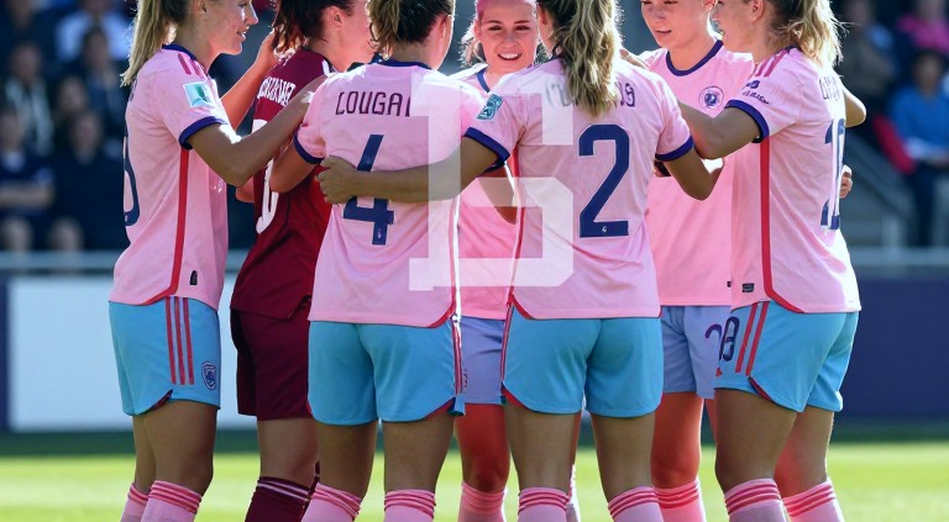
In Saigon I rewatched that tape three times. The first time to hear the words. The second to hear the gaps between the sentences. The third to watch the faces in the front row: a few reporters, a few federation officials, a few former internationals. Nobody nodded. Nobody shook their head. That is where this international window begins, and where this article begins too.
A silent summer: listening for echoes from empty stands. I still write that line in my notebook whenever a match is played in front of a crowd that has stopped believing, even when the seats are full. The silence at Wembley was that kind of silence.
Context: a window packaged as a broadcast product
This international break does not arrive as a pure sporting event. It arrives as a content bundle. In England, an episode of the Guardian Football Weekly podcast is pushed to Apple Podcasts, Instagram, TikTok and YouTube, with an invitation to rate, share and email in. Inside that episode the topics line up neatly: England facing world champions Spain; how Tuchel will approach that fixture; whether the fans actually agree with his framing; Ireland meeting Israel at neutral venues; Scotland with a new manager; France reportedly with Zidane; Germany under Klopp picking two squads for two games; and one small curiosity — whether a listener would pay 125 pounds for a piece of Old Trafford turf.
Reading the whole list, I realised I was looking at a running order, not an analysis. No football metrics appear. No xG, no PPDA, no possession share, no squad lists. That is why I chose to write this differently: to read what is said, and to read what is left out.
Because the gaps are the data.
Core: what this window is actually measuring
The most striking thing about this week sits off the pitch, in the number of coaching chairs that have just changed hands. England have Tuchel. Scotland have a new man. France are said to have Zidane. Germany are said to have Klopp splitting his squad across two fixtures in a single camp. Four national teams, four transitional states, all inside one short window.
In the industry this is called the honeymoon phase. A new manager usually brings a short-term results bounce — a psychological effect, a disciplinary effect, a curiosity effect. But that bounce has a shelf life. After three to five matches, the old structural problems return, and only then does the real framework become visible.
For England, the test is called Spain. The world champions represent the possession model at its highest level. Against them, a team cannot simply play on instinct; it has to choose an identity. Tuchel, on his managerial history, tends toward pragmatism: a flexible defensive block, fast transitions, set-piece emphasis. That is a rational choice against a ball-dominant opponent. It is also an easily read one. If England defend well and fail to score, people will call them unambitious. If England push high and lose, people will call them naive.
There is no data to conclude with. Only one certainty: this match is being used as a yardstick, and a yardstick always has two ends.
In Germany, the meaningful detail is the two-squad selection. In international football, a camp with two back-to-back fixtures forces the manager to split his resources. Picking two squads is a load-management decision, not a tactical one. It sends an internal message: nobody owns a shirt by default. For a young player that is an opening. For an ageing senior figure it is a warning.
Scotland are a smaller case of the same species. A new manager at a squad without depth usually has to choose between building an identity and banking points immediately. Those two goals pull in opposite directions. Points first, build later — it is the common formula, and it is the formula that produces teams nobody remembers.
Golden generations are not born — they are excavated from the mud. And the mud, in international football, is the match nobody watches to the end, the minutes handed to the twenty-third name on the call-up sheet.
Based on my own experience of covering matches in the lower divisions over many years, I have learned that the second-choice eleven always tells the truth more honestly than the first. The first eleven is what a manager wants the world to see. The rotated eleven is what he actually has.
The contrarian angle: neutral venues and football without a host
On the running order, the Ireland item sits behind the big ones. For me it is the heaviest.
Ireland's two games against Israel are staged at neutral venues. The source says so, and also frames them as an impossible task. In football, a neutral venue is rarely a purely footballing decision. It usually comes from a security requirement, from a governing-body directive, from things that live outside the touchline. A team walks into a match without a home stand, without a familiar song, without the ordinary reassurance of home.
I have written a great deal about football in empty stadiums. In 2026, when the pandemic froze every competition, I sat in a rented room in Saigon rewatching Vietnamese matches from 2026, logging every tactical shift of every coach. Those three months taught me one thing: with no crowd, the rhythm of a match becomes more honest and colder at once. Misplaced passes become visible. Players lose the place to hide behind a roar.
For Ireland, the neutral venue adds another layer: non-sporting pressure. When a fixture is defined as impossible, the expectation benchmark drops. That can be a psychological advantage — a nothing-to-lose mindset. It can also be a trap: a team enters in the posture of absorbing defeat, and a team absorbing defeat does not win.
Where nobody is looking, football still whispers the stories it has not yet told. A neutral-venue fixture is one of those stories.
The turf and the economy of memory
What remains is the smallest item, and to me the most revealing: a piece of Old Trafford turf at 125 pounds.
That turf belongs to the market of memory, a market that runs on nostalgia and scarcity. In the economics of modern football, memory is a high-margin good with a finite supply. You cannot keep selling the same strip of grass. You can sell it once, to a group of supporters rich enough and sentimental enough. The 125-pound level sits in the premium bracket of memorabilia — it sells authenticity and scarcity, not utility.
Every transfer is a piece of the puzzle, every player a sediment layer. And sometimes an entire sediment layer is dug up, cut into pieces, boxed and sold to the people who used to stand on it.
The notable thing is the timing, not the price. Big clubs tend to push heritage product lines when they are about to enter a phase of infrastructure change — an upgrade, an expansion, a redefinition of the stadium. The old turf becomes a way of raising money from the past before the future is built. Without confirmed information on a specific infrastructure plan, I keep that as a hypothesis, not a conclusion.
A note on verification
Two items on the source's topic list need careful handling: Zidane taking charge of France, and Klopp selecting two squads for Germany. Both are presented as fact but sit beyond what I can verify from currently available public information.
I raise this to ask a question, not to dismiss. Eleven years in this trade have taught me that in football, a big name placed beside a big chair always generates noise. That noise travels faster than verification. And the reader, standing in the middle of it, usually receives a softened version of the facts.
Which is a reason to write more slowly.
What is left after this week
The international window will pass. Spain will leave the pitch, Tuchel will answer a few more questions, Klopp will finalise his squad, and those pieces of Old Trafford turf will sit in boxes in somebody's house, unopened.
What lingers is outside the scoreline. It is a question about how we read football. We are measuring a football culture by the number of coaching chairs that changed hands, by the number of podcast episodes published, by the number of memory fragments sold. All of those measures are legitimate. All of them say something.
But when I watched the Wembley tape for the third time, what stayed with me was the silence after Tuchel's sentence. A manager talking about progress. A stand that did not answer. That mismatch between two kinds of silence — the silence of the believer and the silence of the one still waiting — is the most analysable data point of the entire week.
And if I had to put one question to the next round of fixtures, I would not ask who wins. I would ask: when the new chairs finally warm up, will the stands rise — or will they keep sitting exactly as they did today?