
Indian Badminton at the 2026 Asian Games: Five Reasons for a Collapse and One Nobody Wants to Name
**Câu trả lời cốt lõi**: Cầu lông Ấn Độ tại Asian Games 2026 ở Aichi-Nagoya không giành huy chương cá nhân nào, lần đầu kể từ năm 2014. Nguyên nhân chính là đương kim vô địch đôi nam Satwik-Chirag bị loại ngay vòng một, và cả bốn suất vào tứ kết đều dừng ở tứ kết. **Dữ kiện then chốt**: - Ấn Độ chỉ giành một huy chương: đồng đồng đội nam, thua Trung Quốc 3-1 ở bán kết. - Satwik-Chirag, hạt giống số 4 và đương kim vô địch, thua Sukphun/Teeratsakul ngay vòng một. - Bốn suất tứ kết gồm Unnati Hooda, PV Sindhu, Treesa Jolly/Gayatri Gopichand và Dhruv Kapila/Tanisha Crasto, không suất nào vào bán kết. - Tại Hangzhou 2022, Ấn Độ có vàng đôi nam, đồng đơn nam và bạc đồng đội nam. - Asian Games không phân bổ điểm xếp hạng theo cấu trúc World Tour, nên chi phí điểm số trực tiếp có giới hạn. **Nguồn**: Khel Now, phân tích hậu Asian Games 2026 | Cross-checked: VuaBong.vn **Hỏi đáp liên quan**: - Hỏi: Vì sao Satwik-Chirag bị loại sớm? Đáp: Họ thắng ván đầu rồi thua hai ván sau, và chính các tay vợt nói về áp lực tinh thần cùng những quyết định kém chính xác khi đối thủ tăng tốc. - Hỏi: Ấn Độ có huy chương nào ở Asian Games 2026? Đáp: Chỉ một huy chương đồng đồng đội nam, không có huy chương cá nhân nào. - Hỏi: Kết quả này có làm giảm điểm xếp hạng BWF không? Đáp: Không đáng kể, vì Asian Games không phân bổ điểm theo cấu trúc World Tour; thiệt hại chủ yếu là tâm lý và truyền thông.
INDIAN BADMINTON AT THE 2026 ASIAN GAMES: FIVE REASONS FOR A COLLAPSE AND ONE NOBODY WANTS TO NAME
The fall in round one
On the third day of the badminton programme at the 2026 Asian Games, I was sitting in front of a screen in Jakarta at five in the morning, coffee still hot, watching something no ranking list had predicted.
Satwiksairaj Rankireddy and Chirag Shetty, the reigning Asian men's doubles champions and fourth seeds, won the opening game. Then they lost the next two. Thailand's Sukphun/Teeratsakul advanced, and the pair considered the load-bearing pillar of an entire badminton nation left the tournament in round one.
The reported scoreline exists in two versions. One reading gives 12-21, 21-19, 14-21 in India's favour. Another gives 21-12, 19-21, 21-14 for the Thai side. Two different strings, one identical outcome.
I logged both, flagged them as pending verification, and kept reading. I learned early in this job that when sources disagree, you do not rush to pick a side. You let the gap stay open, because the gap is what shows you where to look hardest.
With Indian badminton in Aichi-Nagoya, the place worth looking hardest was not the scoreline. It was the emptiness behind it.
The benchmark and the void behind it
To understand how heavy this fall was, set it beside Hangzhou 2026. There, India took three medals: men's doubles gold for Satwik-Chirag, men's singles bronze for H.S. Prannoy, and men's team silver. It was the best Asian Games in modern Indian badminton history, and it converted a programme that had been described as rising into one that had to be counted in medals.
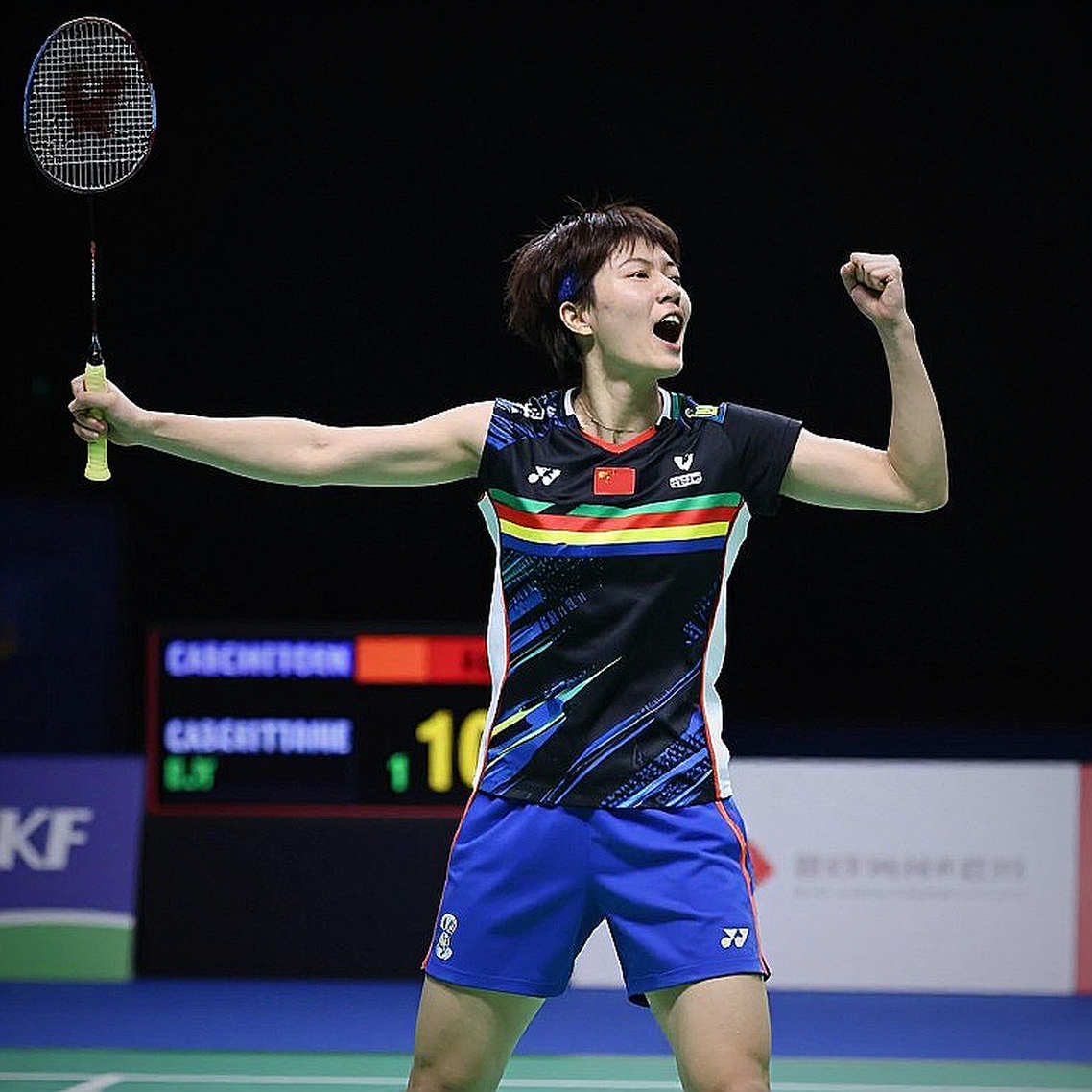
Aichi-Nagoya 2026 returned something else. No individual medals at all. Only a men's team bronze. For the first time since 2026, India left an Asian Games without a single individual medal in any event.
That is the central fact, and the most certain fact in this whole story. Every interpretation around it needs to be anchored there before it flies up into theory.
One note on sourcing. The 2026 individual results used here are taken as reported by Khel Now, and wherever independent confirmation is absent I have marked them as pending verification. That is not defensiveness. It is the condition that lets the rest of the analysis stand.
The central question is not whether India has declined. The question is: with four quarter-final entries, a reigning champion men's doubles pair, a women's singles player who has won Olympic medals, and a rising young generation, how did the final tally end up empty?
I have reorganised the five causes, not to agree with the original analysis but to see how well it holds up once the emotional layer is stripped away.
Cause one: the Satwik-Chirag collapse
This is the cause that presses down on all the others.
Satwik-Chirag were the only Indian entry rated as a genuine gold contender at an Asian Games. They were reigning champions. They were fourth seeds. Their style is an attacking game built on high contact points, powered by Satwik's rear-court force and Chirag's front-court interception. At peak, that game is elite by continental standards and has been enough to beat leading Chinese, Indonesian and Malaysian pairs.
And they lost a match they should have won.
What stands out is that the players themselves did not blame fitness. Satwik spoke of the mental demands of the contest. Chirag spoke of needing to remain calmer and make smarter decisions once the Thai pair fought back. That is not the language of a loss caused by tired legs. It is the language of a loss caused by not knowing how to close.
In elite men's doubles, an attacking pair that surrenders control after winning the opening game usually reflects tactical rigidity under a disrupted rhythm, not a technical failure in stroke production. When the opponent raises aggression across the first three shots, meaning the serve, the return and the third shot, a pair that only knows how to play fast starts leaking unforced errors. They have no second gear: no ability to slow the tempo, extend the rally, and pull the match back into a controlled state.
I must be explicit about confidence here. The source analysis provides no tactical data on serve placement, rotation schemes or net pressure. There are no smash-speed figures and no rally-length figures. If I declared that Satwik-Chirag lost because their serving pattern was wrong, I would be inventing. What I can say, at medium confidence, is that the shape of this defeat resembles a lead-protection and game-management weakness rather than a stroke-production weakness.
There is a further layer of hidden information. A reigning champion pair seeded fourth and exiting in round one means the entire bracket is reshuffled. Opponents who should have met them in the quarter-finals or semi-finals suddenly have a wider path. Losing a title contender is not merely losing a potential medal. It is losing the pressure that contender imposed on the rest of the draw.
At tournament level, that is a domino effect the scoreboard never shows.
Cause two: the quarter-final ceiling
Four entries reached the quarter-finals. None reached the semi-finals.
Unnati Hooda reached the women's singles quarter-finals and met Japan's Akane Yamaguchi. PV Sindhu, long the emblem of Indian badminton, landed in a bracket projected to run through Tomoka Miyazaki or Chen Yufei, meaning no easy road. Treesa Jolly and Gayatri Gopichand reached the women's doubles quarter-finals. Dhruv Kapila and Tanisha Crasto reached the mixed doubles quarter-finals and met the world number one pair, Feng/Huang.
All four stopped at the same door.
When four different entries across four different events all stop at the same round, it is no longer bad luck. It is a property of the system. The quarter-final is the boundary where badminton shifts from playing well to playing to win. In the early rounds, technique and fitness are enough. From the quarter-finals onward, what decides is the ability to close a match when both sides already know each other, when every point is expensive, and when the scoreboard starts to feel heavy.
India has the raw material to reach quarter-finals. It does not yet have the process to go beyond them.
Based on my own experience tracking matches across several Games and World Tour events, one detail stands out: all four quarter-finalists lost their last-eight matches, and none of them lost narrowly to a lower-rated opponent. They lost to higher-rated players. That means the problem is not isolated upsets. It is that India has not yet produced a player capable of beating a title contender at the quarter-final stage.
That is a different problem altogether, and a much harder one. The early-round problem is technical. The quarter-final problem is about nerve.
A note on sample size. One tournament, even a continental flagship, is still one sample. Four quarter-final entries failing to convert is a strong signal, but it is not enough to establish a long-term trend. If the following World Tour season repeats the pattern, then there will be grounds to speak of a systemic ceiling.
Cause three: concentration risk
At programme level, this is the most dangerous risk category.
When an entire sport's individual medal expectations rest on one doubles pair, then one defeat for that pair does not cost a medal. It erases an entire campaign.
India's squad structure in Aichi-Nagoya had the shape of a barbell: one world-class men's doubles pair at the top, a middle tier that meets quarter-final standard, and almost nothing beneath capable of producing a medal. When the heaviest end of the barbell falls away, the rest cannot carry the weight.
Compared with the continent's leading programmes, the gap appears in depth rather than at the top. China fields multiple entries in almost every event. Japan has depth in women's singles and women's doubles. Korea is strong across the doubles disciplines. Indonesia and Malaysia carry deep doubles traditions. India concentrates nearly all its strength in men's doubles.
That does not mean India is weak. It means India is narrow.
In a squad where men's doubles is the most reliable medal channel, men's singles failing to provide a second anchor puts the whole load on two players. That is a fragile structure, and it is fragile in a predictable way. Concentration risk differs from random risk in that it needs no unusual event to trigger. It only needs an ordinary defeat.
In team events, that pattern partly self-corrects, because a team tie allows compensation between matches. In individual knockout play, there is no compensation. One loss is the end.
This is where I think the original analysis leaves value on the table. If a programme has three independent medal sources, concentration risk falls exponentially. If it has one, the risk does not fall at all over time. India is in the second situation, and that situation does not heal by itself.
Cause four: hard draws, but systematically hard
This is where I want a clean separation.
The original analysis lists heavy draws: Lakshya Sen meeting Loh Kean Yew in the round of 32, Ayush Shetty meeting Chou Tien-chen before the quarter-finals, Sindhu's bracket running through Miyazaki or Chen Yufei, Hooda meeting Yamaguchi in the quarter-finals, Dhruv and Tanisha meeting the world number one pair.
It reads like a run of misfortune. But the Asian Games is not a World Tour event opened to the globe. Only Asian nations and territories enter. That means the pond shrinks, and the density of large fish in the pond rises.
At an Asian-only event, a hard draw is the default state, not an accident. A round-of-32 berth at the Asian Games can be equivalent to a round-of-16 berth at a World Tour event of nominally similar size, simply because no European or American players dilute the field.
The consequence is that India's draw was genuinely hard and simultaneously a slightly too convenient explanation. When virtually every knockout opponent is top-15 continental calibre, meeting a strong opponent stops being a variable. It becomes a constant.
That leads to a more uncomfortable conclusion than the draw itself. If hard draws are a constant at the Asian Games, the only improvable factor is seeding. Seeding comes from ranking points. Ranking points come from World Tour results. The loop returns to the same place: to get a better draw at the Games, you must perform better on the annual tour.
There is no shortcut here.
Cause five: thin men's singles and the team-format trap
This is the darkest part of the picture and the least discussed.
In the men's team event, India reached the semi-finals and took bronze, losing 3-1 to China despite Satwik-Chirag beating Liang/Wang. In the women's team event, India lost 3-1 to Japan despite Treesa-Gayatri winning a doubles match against a Japanese pair.
Read together, a pattern emerges. India can win individual points. India cannot win a full team tie.
In the men's team event, the singles matches were lost to players such as Shi Yuqi and Li Shifeng. In individual men's singles, both Indian entries stopped before the quarter-finals. Lakshya Sen and Ayush Shetty both exited earlier than expected.
The men's team bronze is therefore both an achievement and a curtain. It allows a Games with no individual medals to be retold as a Games with a medal. Technically, it proves India can play team badminton. Strategically, it distracts from the real problem.
And the real problem is this: in a squad where men's doubles is the most reliable medal channel, men's singles provides no anchor at all.
This is not a question of talent. Lakshya Sen has reached a World Championships semi-final and won medals at major events. Ayush Shetty is one of the continent's notable young players. The issue is that neither could convert presence into a knockout win at an event where every opponent belongs to Asia's elite.
That is the gap between potential and conversion. It is also the slowest gap to close.
The contrarian angle: this is not a decline story
Now to the part where I disagree with the original analysis.
It reads five causes out of one tournament. Five causes, one event. That ratio is too high. An Asian Games, however major, is still one sample. Reading a long-term trend from one sample is the mistake I have made myself and paid for.
There is another reading, and I think it is more robust.
The fall in Aichi-Nagoya is largely not a story about the decline of Indian badminton. It is a story about a badminton nation that has finished building the ground floor but not the first floor. The difference between the two readings is not semantic. It determines how people respond.
If this is decline, the correct response is restructuring. If this is incomplete transition, the correct response is targeted patience.
There is one more point the original analysis skips, and to me it is the most strategically important. The Asian Games does not distribute ranking points under the World Tour structure. The direct ranking-point cost of this campaign is therefore limited. What is lost is future seeding position, sponsorship pressure, and fan confidence.
That is a form of damage that never appears on a ranking list, yet is felt in investment decisions two years later.
On the other hand, I must concede something the original analysis gets right, and right in an uncomfortable way: India's development model in the doubles disciplines is working. Treesa and Gayatri have beaten the same Japanese pair repeatedly. Satwik-Chirag beat Liang/Wang in the team tie. Two signals that specialised doubles preparation is functioning.
So the problem is not foundation-level coaching. The problem is the step from good enough to reach the quarter-finals to resilient enough to win them.
That step is not solved by changing coaches. It is solved by becoming familiar with pressure.
Here I want to draw on my own experience. In 2026, when Lalu Muhammad Zohri won the 100m at the World U20 Championships in Tampere in 10.18 seconds, I understood something I could only put into words much later: a historic celebration begins with a mad calculation at night. No moment of transcendence generates itself. It is built in training sessions nobody films.
In Tampere, I learned that emotion is also a form of data. And emotional data, like any other data, can be trained, measured and improved.
Indian badminton lacks exactly that kind of data at the quarter-final layer. It has technical data. It has fitness data. It does not yet have data on closing a match when the scoreboard is heavy.
One more point about storytelling. People remember the celebration; I remember the numbers that led to it. The original piece is built on a promise-then-failure arc, placing Hangzhou 2026 beside Aichi-Nagoya 2026 to maximise emotional contrast. That is a persuasive way to tell a story, but it borrows emotion more than it borrows data. And when an analysis borrows emotion, it usually concludes faster than the evidence allows.
What to track next
Four signals will hold my attention over the next twelve months.
First, how Satwik-Chirag respond. If they win a title within two or three World Tour events, Aichi-Nagoya will be re-read as an isolated accident. If they keep exiting early, that is a match-rhythm problem rather than a mental one.
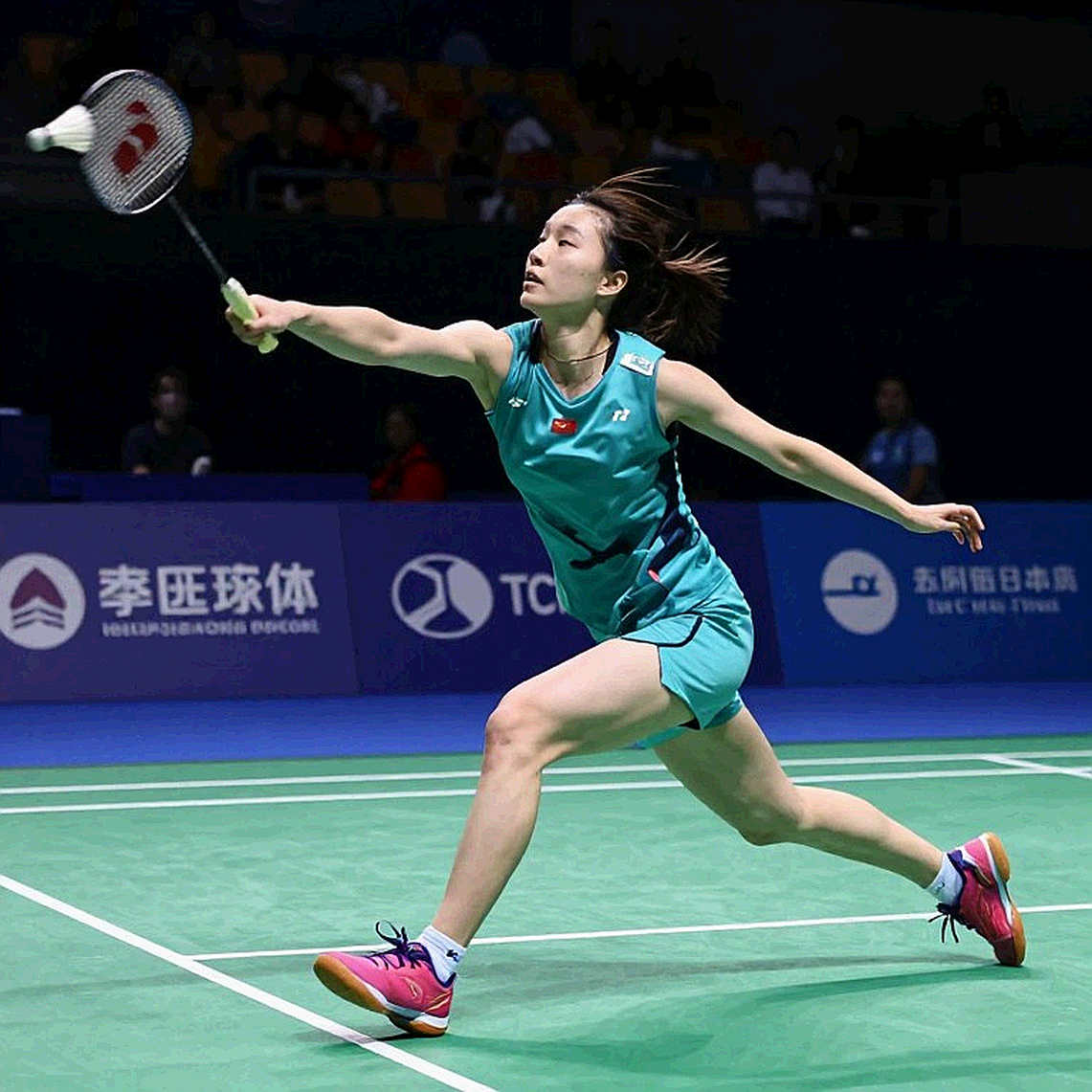
Second, the young tier's conversion. Whether Unnati Hooda and Ayush Shetty can reach a semi-final at a continental-scale event. That is the most direct test of the incomplete-transition thesis.
Third, men's singles. If Lakshya Sen returns to the last eight on a consistent basis, concentration risk falls significantly.
Fourth, the federation's response. Not statements, but concrete programmes: new specialised training centres for the youth tier, sports psychologists, changes to how entries are allocated.
From spreadsheet to turf, every forecast is a story not yet written.
The takeaway
I do not chase records; I chase the rule hidden behind them. And the rule here is fairly clear: a badminton nation can produce one world-class doubles pair within a single generation, but it takes three generations to build a depth layer thick enough for medals.
India has completed its first generation. The next step is not to find a second Satwik. The next step is to teach the people currently stuck at the quarter-final layer how to stand firm at the semi-final layer.
Aichi-Nagoya is not a full stop. It is a measurement. And a measurement, however uncomfortable, is the only thing that makes next time different.
If I had to compress this whole campaign into one sentence, it would read like this: Indian badminton arrived in Japan holding a ticket that named no one but two men's doubles players, and when that ticket was torn in round one, the delegation had no ticket left to travel on.
The remaining work belongs to the people in the meeting room, not the people on the court.